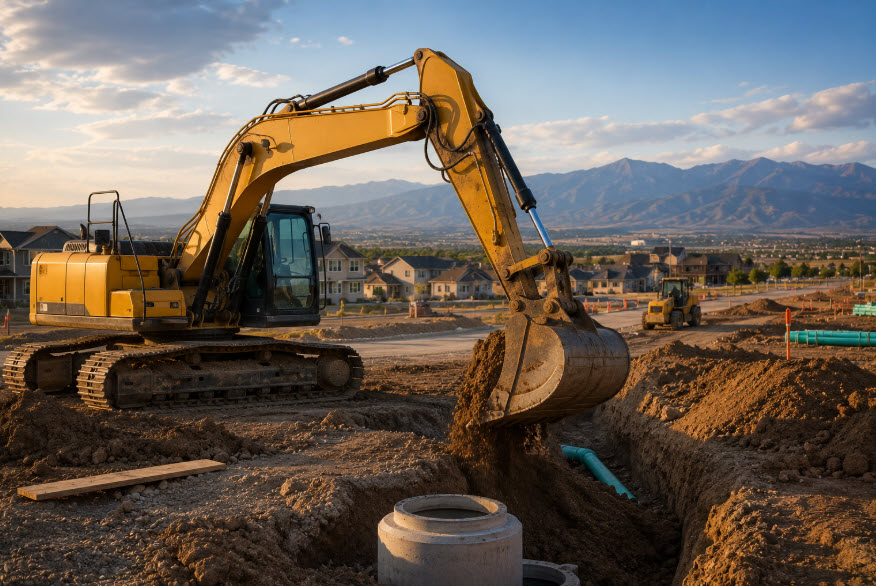
Excavation contractors play an important role in Colorado’s construction and infrastructure industries, preparing sites for new homes, commercial buildings, utilities, roads and other projects. From smaller contractors handling foundations and residential grading to established excavation companies performing trenching, drainage, utility work and commercial site development, these businesses depend on heavy equipment and experienced operators to complete work safely and efficiently.
Excavation work is especially common throughout Colorado’s Front Range growth corridor, including the Denver metro area, Castle Rock and Douglas County, Colorado Springs, Monument, Fort Collins, Loveland, Greeley and surrounding communities. Residential development, commercial construction, utility installation and infrastructure projects all create demand for excavation services. The right insurance can help protect the contractor while also making it easier to provide certificates of insurance, meet general contractor requirements and qualify for larger commercial projects.
How Much Does Excavation Contractor Insurance Cost in Colorado?
In 2026, a smaller Colorado excavation contractor may pay approximately $1,200 to $3,500 per year for general liability insurance, although premiums can fall outside this range. Current excavation-industry data shows contractors averaging roughly $1,500 per year for general liability coverage. A small contractor performing residential grading, foundation excavation or similar local work may fall toward the lower end, while companies performing deeper trenching, utility work or larger commercial projects may pay more.
A broader excavation insurance program may cost approximately $5,000 to $25,000 or more per year once workers compensation, commercial auto, contractors equipment coverage, higher liability limits and other protection are included. Larger excavation companies with substantial payroll, multiple dump trucks, expensive heavy machinery or major commercial projects can pay considerably more. Pricing depends on annual revenue, payroll, project size, equipment values, excavation depth, vehicle use, claims history, subcontractor costs and the specific services performed.
What Type of Insurance Coverage Does an Excavation Contractor Need?
Most Colorado excavation contractors should begin with general liability insurance. This coverage can help with certain third-party bodily injury and accidental property damage claims. Excavation losses can involve damage to neighboring property, underground utilities or other structures while grading, digging or trenching.
Heavy equipment is another major exposure. Excavation contractors may own excavators, skid steers, backhoes, compact track loaders, trenchers and expensive attachments. Tools and equipment insurance or contractors equipment coverage can help protect eligible machinery against covered losses while it is being transported, stored or used at job sites. Larger machines may need to be specifically scheduled based on their value and how they are used.
Companies operating dump trucks, pickups, service vehicles or other road vehicles should also consider commercial auto insurance. Colorado excavation businesses with employees will generally need workers compensation insurance. Contractors taking on larger commercial or municipal projects may also need commercial umbrella insurance when contracts require liability limits above their underlying policies.
Why Are Underground Utility Strikes Important for Excavation Contractors?
Underground utility damage is one of the most important liability exposures for an excavation company. Digging or trenching can damage natural gas lines, electrical service, water and sewer systems, telecommunications lines and other buried infrastructure. A utility strike can result in emergency repairs, property damage, project delays and potentially serious injuries.
Insurance companies may ask about utility-locating procedures, excavation depth and how frequently the contractor works around underground infrastructure. Contractors should accurately describe their trenching and utility operations when requesting coverage so the insurance company understands the work actually being performed.
Does Trenching Affect Excavation Contractor Insurance?
Yes. Trenching can materially affect both underwriting and workers compensation exposure. Employees working in or around trenches can face hazards from cave-ins, falling material, water accumulation, moving equipment and underground utilities. Trench depth, soil conditions and the type of work being performed can all be relevant when a carrier evaluates the risk.
Contractors performing significant utility trenching or deeper excavation should clearly disclose those operations during the quoting process. Safety procedures, employee experience and the use of appropriate protective systems such as sloping, shoring or shielding may also be important when insurers review the operation.
What Do Insurance Companies Look at When Insuring an Excavation Contractor?
Underwriters generally want a detailed breakdown of the contractor’s operations. They may ask what percentage of revenue comes from grading, foundation excavation, trenching, utility work, drainage, septic systems, land clearing or commercial site development. Maximum excavation depth, maximum project size and whether work is residential, commercial or municipal can also affect eligibility and pricing.
Insurance companies may also review annual revenue, payroll, employee experience, prior claims, equipment values, vehicle exposure and subcontractor use. A contractor operating one compact excavator on residential projects presents a very different risk than a company running multiple excavators, loaders and dump trucks on large commercial sites.
Does Grading and Site Development Affect Excavation Insurance?
Many Colorado excavation companies perform much more than basic digging. Site development may include clearing, grading, drainage, erosion control, road preparation and preparing sites for foundations or utility installation. These larger projects can increase both the size and complexity of the contractor’s exposure.
Insurance companies may ask about maximum project values, acreage, terrain and whether the company performs road work, retaining-wall preparation or other operations beyond basic excavation. Clearly describing these services helps ensure the contractor is placed with an insurance market that considers the work being performed.
Does Hauling Affect Excavation Contractor Insurance?
Excavation contractors frequently use dump trucks and trailers to move soil, aggregate, construction debris and equipment between job sites. This creates a commercial auto exposure separate from the excavation work itself.
Insurance companies may consider the number and size of trucks, employee driving records, hauling radius and whether the company transports only its own materials or also provides hauling services for other businesses. A contractor operating several heavy dump trucks may have very different insurance needs than a smaller excavator using a pickup and equipment trailer.
Can Pollution Liability Be Important for Excavation Contractors?
Excavation can occasionally uncover contaminated soil, underground storage tanks, fuel or other pollutants that were not visible before work began. Equipment leaks and work on older commercial or industrial sites can create additional environmental concerns. Because general liability policies can contain pollution exclusions or limitations, some excavation contractors may need separate contractors pollution liability coverage.
The need for pollution coverage depends on the projects and services performed. A contractor working primarily on new residential sites may have different environmental exposure than a company performing excavation on redevelopment, industrial or potentially contaminated properties.
How Do Subcontractors Affect Excavation Contractor Insurance?
Excavation contractors may subcontract trucking, concrete work, utility installation, environmental remediation or other specialized services. Insurance companies may ask how much work is subcontracted and whether subcontractors maintain their own general liability and workers compensation insurance.
Written agreements and current certificates of insurance can be important for both underwriting and commercial contracts. Colorado employers are generally required to maintain workers compensation insurance when they have employees, and excavation contractors should pay particular attention to worker classification and proof of insurance when subcontractors are involved.
Insurance Companies That May Cover Colorado Excavation Contractors
Castle Rock Insurance is a Colorado insurance agency that works with its partners to help excavation contractors explore coverage through standard and specialty commercial insurance markets. Depending on the contractor’s operations, project size, excavation depth, payroll, equipment, vehicles, subcontractor exposure and claims history, options may be available through carriers such as Travelers and other construction-focused insurance markets that consider excavation contractors. Carrier appetite varies between residential grading, utility trenching, commercial site development and other excavation operations, so Castle Rock Insurance and its partners can help review the business and compare available coverage options.
Get Your Excavation Business Insured Today!
Whether your company performs residential excavation, grading, foundation work, utility trenching or larger commercial site development, Castle Rock Insurance and its partners can help you explore insurance options for your liability, employees, vehicles and heavy equipment. Contact us today to compare available coverage options and request a Colorado excavation contractor insurance quote.