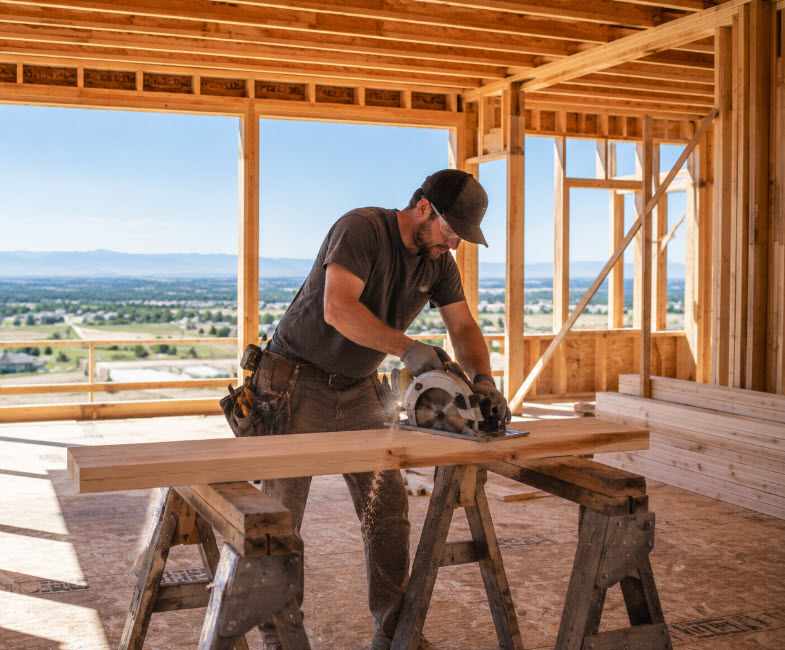
Carpentry contractors work throughout Colorado on residential and commercial projects ranging from trim, cabinets and finish carpentry to framing, decks, stairs and structural work. Whether an independent carpenter handles smaller remodels or a larger company operates multiple framing crews, the right insurance can help protect against job-site injuries, property damage, stolen tools, vehicle accidents and other risks associated with the trade.
Insurance needs can vary considerably by operation. Interior finish carpentry presents a different exposure than structural framing or elevated exterior work, while general contractors, developers and commercial property owners may impose additional insurance requirements before a carpenter can begin a project.
How Much Does Carpentry Contractor Insurance Cost in Colorado?
In 2026, a smaller Colorado carpentry contractor may pay approximately $700 to $3,000 per year for general liability insurance, although premiums can fall outside this range. Current industry data places average carpenter general liability premiums around $1,100 per year. An owner-operated finish carpenter working primarily on smaller residential projects may fall toward the lower end, while framing contractors and companies handling larger or higher-risk projects may pay more.
A broader carpentry contractor insurance program may cost approximately $4,000 to $20,000 or more per year when workers compensation, commercial auto, tools and equipment and higher liability limits are included. Revenue, payroll, employee count, project size, working height, claims history, subcontractor use and commercial vehicles can all affect the final premium.
What Insurance Does a Colorado Carpentry Contractor Need?
Most carpentry contractors should consider general liability insurance for certain third-party bodily injury and accidental property damage claims. For example, tools or building materials could damage customer property, someone could be injured around an active work area or completed carpentry could contribute to covered property damage.
Carpenters may also need tools and equipment insurance for eligible saws, nailers, compressors and other portable equipment, along with commercial auto insurance for business-owned pickups, vans or other road vehicles. Companies with employees will generally need workers compensation, while larger contractors may need commercial umbrella insurance when projects require higher liability limits.
What Does Colorado Require of Carpentry Contractors?
Colorado does not currently have one universal statewide carpentry contractor license. Unlike electrical and plumbing contractors, carpenters are generally subject to licensing, registration, permit and insurance requirements established by the city or county where the work is performed. Contractors should verify local requirements before performing work that requires registration or a building permit.
Workers compensation is particularly important for Colorado construction businesses. Colorado employers generally must maintain workers compensation insurance when they have employees, subject to limited exceptions. Construction contractors should also pay close attention to coverage and proof-of-coverage requirements when using subcontractors or other workers. The Colorado Department of Labor and Employment provides current guidance on workers compensation requirements and exemptions.
Colorado does not impose one universal general liability limit on every carpenter statewide. Liability requirements may instead come from local contractor rules, general contractors, developers, property owners or individual construction contracts. Depending on the project, a carpenter may need to provide a certificate of insurance, additional insured status, a waiver of subrogation or higher liability limits.
What Do Insurance Companies Look at When Insuring a Carpenter?
Insurance companies want to understand what type of carpentry the business actually performs. Underwriters may consider finish carpentry, cabinets, trim, framing, decks, stairs, remodeling and structural work along with annual revenue, payroll, maximum project size, residential versus commercial work, employee experience, claims history, subcontractors and commercial vehicles.
The nature and height of the work can be particularly important. A trim carpenter working primarily inside finished homes presents a different exposure than a framing contractor building structural walls, roof systems, decks or elevated structures. Insurers may therefore ask about structural work, maximum working height and the use of ladders, lifts or scaffolding.
How Do Structural Work and Larger Projects Affect Coverage?
Framing, structural alterations, decks, stairs and other load-bearing or elevated work can create greater liability and completed-operations exposure than basic finish carpentry. Contractors should accurately disclose these operations when requesting coverage because carrier appetite and pricing can differ substantially between interior finish work and structural construction.
Commercial projects may also require specific general liability limits, workers compensation, commercial auto, additional insured endorsements, waivers of subrogation or umbrella coverage. Reviewing these requirements before bidding can help ensure the contractor has the necessary coverage and documentation before work begins.
How Do Subcontractors Affect Carpentry Contractor Insurance?
Carpentry businesses that subcontract portions of their work should accurately disclose those costs and operations. Insurance companies may require subcontractors to maintain their own general liability and workers compensation coverage, while written agreements and certificates of insurance can become important during underwriting and policy audits.
Insurance Companies That May Cover Colorado Carpentry Contractors
Castle Rock Insurance is a Colorado insurance agency that works with its partners to help carpentry contractors explore standard and specialty commercial insurance markets. Carrier appetite can vary significantly between finish carpentry, framing, remodeling, decks and larger structural projects. Depending on the company’s operations, payroll, project size, vehicles, subcontractors and claims history, Castle Rock Insurance and its partners can help review the business and compare available coverage options.
Get a Colorado Carpentry Contractor Insurance Quote
Whether your business focuses on finish carpentry, cabinets, framing, decks, stairs or larger residential and commercial projects, Castle Rock Insurance and its partners can help you explore insurance options for your liability, employees, vehicles and equipment. Contact us today to compare available coverage options and request a Colorado carpentry contractor insurance quote.