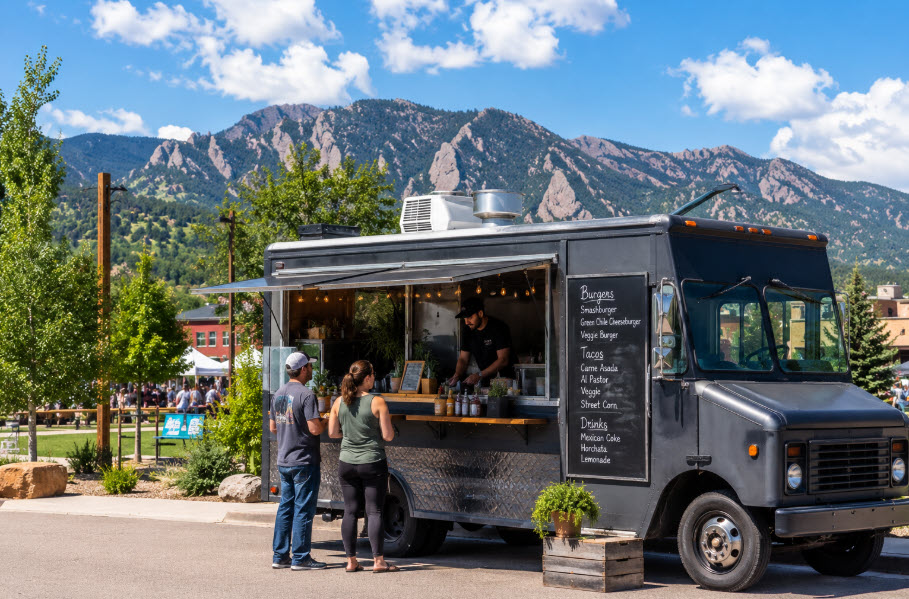
Colorado’s food truck industry includes everything from owner-operated trucks serving a regular lunch route to larger mobile food businesses working festivals, breweries, corporate events, farmers markets and private catering jobs. While mobility is part of what makes the business appealing, it also creates a unique combination of risks. A food truck is simultaneously a vehicle, commercial kitchen, mobile storefront and place where customers interact with your business.
That means food truck insurance usually needs to address more than basic liability. The right coverage can depend on whether you operate a self-propelled truck or food trailer, what you cook, whether you use propane or deep fryers, the value of your kitchen equipment, where you operate, your annual sales, employees, driving history and whether you cater private events in addition to regular street service.
How Much Does Food Truck Insurance Cost in Colorado?
In 2026, a smaller owner-operated Colorado food truck with a clean claims and driving history may reasonably budget approximately $2,500 to $5,500 per year for a combination of core business insurance and commercial auto coverage. A business purchasing only general liability may pay considerably less, but that should not be confused with the cost of insuring the truck, kitchen equipment and other exposures involved in operating a mobile food business.
A more established operation may spend approximately $4,000 to $10,000 or more per year when coverage includes commercial auto, business property or equipment, workers’ compensation, higher liability limits and other protection. Premiums can rise further for expensive customized trucks, multiple vehicles, employees, poor driving records, prior claims, substantial cooking equipment or operations involving higher-risk cooking methods. Because commercial auto can represent a significant portion of the total premium, the truck’s value, drivers, operating radius and driving history are especially important when estimating overall cost.
What Insurance Does a Colorado Food Truck Need?
General liability insurance is one of the foundations of a food truck insurance program. It can help protect the business against third-party bodily injury and property damage claims, such as a customer slipping near the service area or the business accidentally damaging property while operating at an event. Food businesses should also make sure their liability protection appropriately addresses claims related to the food they sell, since foodborne illness and other product-related allegations can create a very different exposure from a typical retail business.
For eligible businesses, a Business Owner’s Policy (BOP) may combine general liability with commercial property and business income coverage. This can be particularly useful for a food truck with expensive refrigerators, grills, fryers, generators, point-of-sale equipment, inventory and other business property. Depending on the insurer and policy, owners may also want to discuss equipment breakdown, food spoilage and inland marine coverage for property that regularly moves with the business.
A self-propelled food truck will generally also need commercial auto insurance. This is an important distinction because general liability does not replace auto liability coverage when the truck is being driven. Businesses operating a towable food trailer may have a different insurance structure involving the towing vehicle and separate protection for the trailer itself, so the setup should be explained accurately when requesting quotes.
Workers’ Compensation and Employee Risks
Food trucks may operate in tight spaces with hot cooking surfaces, knives, fryers, propane, electrical equipment and slippery floors. Once employees are involved, workplace injuries become another important part of the insurance program. Colorado employers generally need workers’ compensation insurance when they have employees, subject to applicable state requirements and exemptions.
Payroll and employee duties can have a meaningful impact on workers’ compensation pricing. A food truck with several cooks and employees working long hours at events may therefore have a different insurance profile from an owner-operated truck with no employees. Accurate payroll estimates and employee classifications help insurers price the risk correctly.
Food Truck Insurance for Festivals, Breweries and Private Events
Many Colorado food trucks operate at more than one type of location. A business might serve lunch at an office park during the week, park at a brewery on weekends and cater festivals or private events throughout the summer. These arrangements can create additional insurance requirements even when the underlying food operation stays the same.
Event organizers, property owners, breweries, municipalities and corporate clients may require a certificate of insurance and may ask to be added as an additional insured before allowing a food truck onto the property. Some contracts also require higher liability limits. Food truck owners should review these requirements before an event rather than assuming a basic policy automatically satisfies every venue contract.
What Affects the Cost of Food Truck Insurance?
Insurance companies consider both the food operation and the vehicle when underwriting a food truck. Annual revenue, menu, cooking methods, propane use, fryers, truck value, kitchen equipment, operating territory, number of events, payroll, prior claims and years in business can all affect eligibility and premium. On the auto side, insurers may review each driver’s history, vehicle type, vehicle value, annual mileage and how far the truck regularly travels.
The difference between a $40,000 food truck serving a limited local route and a highly customized $150,000 mobile kitchen traveling throughout Colorado can be substantial. Businesses with multiple trucks, significant catering operations or higher-value equipment may also need a broader commercial package than a newer owner-operated business.
Colorado Food Truck Laws Changed in 2026
Colorado food truck operators should also be aware of an important regulatory change that took effect on January 1, 2026. Colorado House Bill 25-1295 created a more consistent framework for qualifying mobile food establishments operating across different Colorado jurisdictions. Among other changes, the law provides recognition between qualifying state health department and Denver retail food licenses, making it easier for properly licensed mobile food businesses to operate across jurisdictional boundaries.
That does not mean a food truck can operate anywhere in Colorado without additional requirements. Local governments can still enforce their own zoning, fire safety, operating and other local codes. The law also includes notification and documentation requirements when certain licensed mobile food establishments begin operating in another jurisdiction. Food truck owners should therefore verify current health, fire, sales tax, zoning and local operating requirements for every city or county where they plan to do business.
Food Safety, Propane and Cooking Equipment Matter to Insurers
A food truck is different from many other mobile businesses because the vehicle may contain commercial cooking equipment, propane cylinders, open flames, electrical systems and refrigeration equipment. Insurers may ask about automatic fire suppression systems, hood and ventilation systems, propane storage, fryer use and regular inspection or maintenance procedures.
The menu can matter as well. A truck primarily preparing coffee and prepackaged foods may present a different risk than an operation using deep fryers, grills and multiple propane appliances throughout the day. Providing accurate information about cooking methods and equipment helps prevent coverage gaps and allows insurers to determine whether the business fits their food truck underwriting guidelines.
Insurance Companies That Cover Colorado Food Trucks
Food truck insurance is available through a variety of commercial insurance markets, but not every carrier approaches the risk the same way. Some insurers are more competitive for small owner-operated trucks, while others may be better suited for businesses with employees, expensive customized vehicles, catering operations or multiple units. A carrier that is competitive on the liability portion of the business may also not provide the best commercial auto option.
Castle Rock Insurance works alongside commercial insurance partners to compare standard and specialty markets for Colorado food truck businesses. Reviewing more than one option can be particularly valuable with food trucks because the business combines restaurant, property and commercial vehicle exposures within a single operation.
Get a Food Truck Insurance Quote in Colorado
The best food truck insurance program should reflect how the business actually operates. A single owner-operated truck serving a few regular locations has different needs from a growing mobile food company with employees, multiple vehicles, expensive cooking equipment and a full calendar of festivals and catered events.
Castle Rock Insurance and its partners help Colorado food truck owners compare insurance options based on the truck, equipment, menu, employees, operating area and overall business. Contact us today to request a personalized quote and review coverage designed around your mobile food operation.