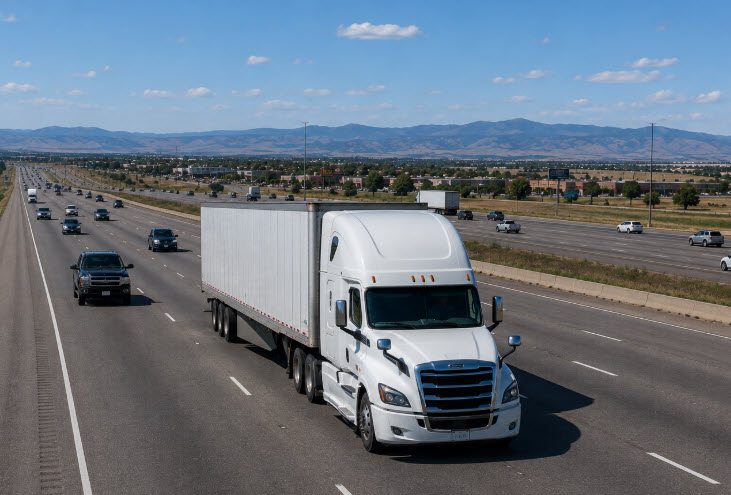
Commercial trucking companies move freight throughout Colorado and across the country, from independent owner-operators to established fleets hauling construction materials, consumer products, refrigerated goods and specialized freight. Trucking insurance is more specialized than ordinary business auto coverage because it can involve heavy trucks, professional drivers, valuable cargo, trailers and state or federal motor-carrier requirements.
Coverage should reflect the trucks, drivers, operating radius, commodities hauled and whether the business operates locally, throughout Colorado or across state lines. Commercial auto liability, physical damage, motor truck cargo and trailer exposures can all change substantially based on the operation.
How Much Does Commercial Trucking Insurance Cost in Colorado?
In 2026, a Colorado owner-operator or smaller trucking company may commonly pay approximately $8,000 to $15,000 or more per truck per year for core trucking insurance. A broader program including physical damage, motor truck cargo and trailer coverage may cost approximately $10,000 to $25,000 or more per truck annually.
Actual premiums vary considerably. Truck value, driver experience, operating radius, annual mileage, commodities hauled, USDOT history, prior claims and selected coverage limits all affect pricing. New ventures, long-haul operations and drivers with challenging records may pay substantially more.
What Insurance Does a Colorado Trucking Company Need?
Commercial auto liability is the foundation of most trucking insurance programs and can help cover bodily injury and property damage caused by an insured truck. Our Colorado commercial auto insurance guide explains liability and physical damage coverage for business vehicles in greater detail.
Depending on the operation, trucking companies may also need physical damage for tractors and owned equipment, motor truck cargo for customer freight, trailer interchange for non-owned trailers and workers compensation for employees. Owner-operators leased to another motor carrier may also need bobtail or non-trucking liability coverage.
Motor Truck Cargo & Commercial Payload Insurance
Motor truck cargo insurance, also known as commercial payload insurance, is designed to protect freight a motor carrier is responsible for transporting. Coverage may apply to certain losses involving collision, overturn, fire, theft and other covered causes while cargo is in transit.
In 2026, a smaller trucking operation may commonly pay approximately $1,000 to $3,000 per year for motor truck cargo coverage, although high-value, refrigerated, theft-sensitive or specialized freight can cost considerably more. Cargo limits should reflect maximum load values and requirements imposed by shippers, freight brokers and customers.
What Is Trailer Interchange Coverage?
Trucking companies pulling trailers owned by another business may need trailer interchange coverage. It can help protect a non-owned trailer while it is in the carrier’s possession under a written trailer interchange agreement. This is different from physical damage coverage for trailers the trucking company owns.
Bobtail & Non-Trucking Liability Insurance
Bobtail and non-trucking liability insurance can address certain liability exposures when an owner-operator uses a truck outside normal dispatched hauling activity, depending on the policy and circumstances.
These coverages do not replace primary trucking liability or cargo insurance. Owner-operators leased to another motor carrier should review their lease to determine which insurance the carrier provides and which policies they must maintain themselves.
Colorado Commercial Trucking Insurance Requirements
Colorado insurance requirements depend on the carrier, vehicle, commodities and whether the operation is intrastate or interstate. Colorado applies federal financial-responsibility standards under 49 CFR Part 387 to certain motor carriers. Covered nonhazardous for-hire property carriers operating heavier commercial vehicles generally require at least $750,000 in public liability coverage, while certain hazardous-material operations require higher limits.
Requirements and exemptions vary by operation. Trucking businesses should confirm the rules that apply through the Colorado State Patrol commercial vehicle rules.
Federal Insurance Requirements for Interstate Trucking
Interstate for-hire property carriers are subject to federal financial-responsibility requirements based on vehicle weight and commodities. Nonhazardous for-hire property carriers generally require at least $300,000 for vehicles under 10,001 pounds and $750,000 for vehicles weighing 10,001 pounds or more. Certain hazardous-material operations require $1 million or $5 million.
These are regulatory minimums rather than recommended limits for every business. Shippers, freight brokers, lenders and contracts may require higher coverage, while operating authority can require filings with the Federal Motor Carrier Safety Administration.
How Do Freight & Operating Radius Affect Trucking Insurance?
What a trucking company hauls and where it travels can significantly affect pricing and carrier eligibility. General freight is evaluated differently from automobiles, refrigerated products, household goods, hazardous materials and high-value cargo. A local Colorado carrier also presents a different exposure from a long-haul operation traveling through multiple states.
Underwriters commonly consider annual mileage, states traveled, maximum operating radius, overnight parking, truck storage and maximum cargo values. Material changes in freight or territory should be disclosed to the insurer.
Workers Compensation for Trucking Companies
Colorado trucking businesses with employees will generally need workers compensation insurance, subject to limited exceptions. Drivers, mechanics, warehouse employees and other workers may have different classifications and payroll-based rates, making accurate job duties important during underwriting.
Insurance for Local Hauling & Junk Removal Businesses
Not every business operating a truck fits a traditional interstate trucking profile. Companies using pickups, dump trucks and trailers for junk removal, property cleanouts, construction debris, landscaping materials and local hauling often have a combination of commercial auto, liability, trailer and equipment exposures.
These businesses can review our Colorado hauling and junk removal insurance guide for coverage specific to local hauling and service operations.
What Do Trucking Insurance Companies Look At?
Insurance companies commonly review driver experience, motor vehicle records, CDL history, truck type and value, operating radius, commodities hauled, prior claims and vehicle storage. USDOT information, operating authority, inspection history, years in business and prior insurance can also affect eligibility and cost.
Get a Colorado Commercial Trucking Insurance Quote
Whether you are an owner-operator with one truck or manage a growing fleet, Castle Rock Insurance and its commercial insurance partners can help explore coverage for commercial auto liability, physical damage, motor truck cargo insurance, trailers, employees and other trucking exposures. Contact us to request a Colorado commercial trucking insurance quote.
rance quote.