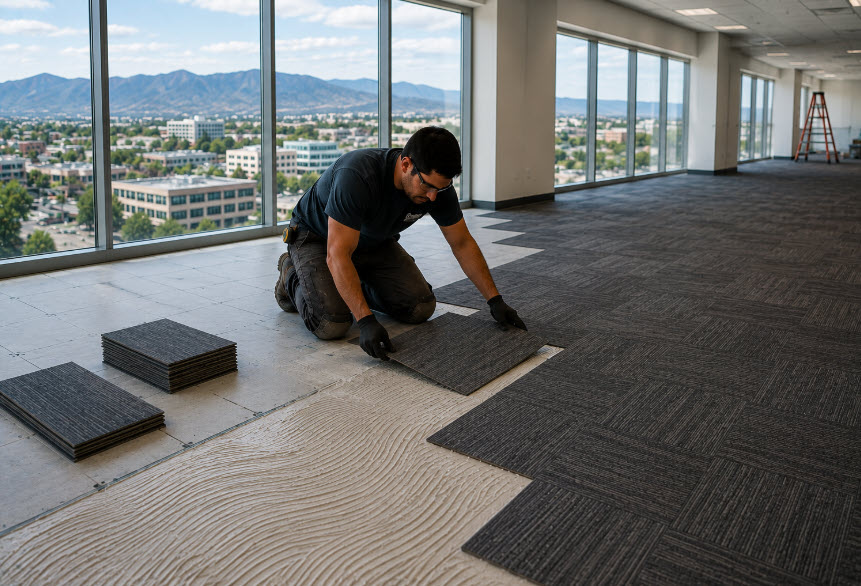
Commercial flooring contractors work throughout Colorado installing and replacing flooring in offices, retail spaces, apartment communities, hotels, medical facilities and other commercial properties. From independent installers to established flooring companies serving Denver, Colorado Springs, Fort Collins, Castle Rock and communities across the Front Range, these businesses regularly work inside valuable customer properties while transporting materials, tools and equipment between job sites.
Flooring installation can create significant liability exposure. Tools or materials can damage walls, cabinetry and other finished property, employees can be injured while lifting flooring or operating saws and grinders and installation problems can lead to expensive callbacks or property damage claims. General contractors, property managers and commercial customers may also require certificates of insurance, additional insured status and specific coverage limits before a flooring contractor can begin work.
How Much Does Commercial Flooring Contractor Insurance Cost in Colorado?
In 2026, a smaller Colorado flooring contractor may pay approximately $600 to $2,000 per year for general liability insurance, although premiums can fall outside this range. Current flooring-industry data shows flooring and carpet installers averaging roughly $760 per year for general liability coverage. A smaller contractor performing straightforward flooring installation may fall near the lower end, while businesses with higher revenues, employees or larger commercial projects may pay more.
A broader flooring contractor insurance program may cost approximately $2,500 to $12,000 or more per year once workers compensation, commercial auto, tools and equipment and higher liability limits are included. Larger flooring companies with multiple crews, substantial payroll, commercial vehicles or major contracts can pay considerably more. Pricing depends on annual revenue, payroll, employee count, claims history, project size, vehicle use, subcontractor costs and the specific flooring operations performed.
What Insurance Does a Commercial Flooring Contractor Need?
Most Colorado flooring contractors should begin with general liability insurance. This coverage can help with certain third-party bodily injury and accidental property damage claims. Examples could include damaging baseboards or cabinetry during installation, a customer tripping over flooring materials or equipment or work contributing to covered property damage.
Flooring contractors often invest in saws, sanders, grinders, nailers, compressors and floor-preparation equipment that moves between projects. Tools and equipment insurance can help protect eligible equipment against covered losses while it is transported, stored or used away from the contractor’s primary location.
Businesses using vans, pickups or other vehicles to transport employees, tools and materials should also consider commercial auto insurance. Colorado flooring companies with employees will generally need workers compensation insurance. Contractors taking on larger commercial projects may also need commercial umbrella insurance when contracts require liability limits above the underlying policies.
What Do Insurance Companies Look at When Insuring a Flooring Contractor?
Insurance companies typically want to understand exactly what types of flooring the contractor installs and what additional services are performed. Underwriters may ask what percentage of revenue comes from carpet, hardwood, laminate, luxury vinyl plank, tile, stone or other flooring materials. They may also ask whether the contractor removes existing flooring, sands or refinishes hardwood, performs significant surface preparation or handles other specialty work.
Annual revenue, payroll, employee experience, claims history, commercial vehicle use, maximum project size and subcontractor costs can also affect eligibility and pricing. A contractor installing carpet and LVP in smaller offices presents a different exposure than a company completing large flooring projects in hotels, apartment communities or commercial buildings.
Does Hardwood Flooring or Refinishing Affect Insurance?
Hardwood installation and refinishing can create different exposures than basic carpet or resilient flooring installation. Contractors may use saws, nailers, sanding machines, stains, finishes and adhesives while working inside occupied or finished properties.
Businesses that perform significant sanding, refinishing or hardwood restoration should clearly disclose those services when requesting insurance. Carrier appetite and policy terms can differ between installation-only flooring contractors and companies performing extensive refinishing or restoration work.
Does Tile or Stone Installation Affect Flooring Contractor Insurance?
Tile and stone contractors work with heavier materials and may use wet saws, grinders, mortar, adhesives and other specialized equipment. These operations can affect both liability and workers compensation exposure.
Insurance companies may want to know whether the business installs ceramic tile, natural stone, countertops or other materials in addition to conventional flooring. Accurately describing these operations helps make sure the contractor is being evaluated under the appropriate classification.
How Do Occupied Commercial Properties Affect Flooring Insurance?
Commercial flooring contractors often work in offices, apartment buildings, retail locations, hotels and other properties that remain partially occupied while installation is underway. Employees, tenants or customers may continue moving through nearby areas while flooring materials, adhesives, cords and equipment are present.
This can increase the potential for trip-and-fall claims and accidental property damage. Contractors should accurately describe the types of commercial properties they service and whether projects are generally completed in occupied or vacant spaces.
How Do Subcontractors Affect Flooring Contractor Insurance?
Flooring companies may use subcontractors for carpet, tile, hardwood or specialty installation work. Insurance companies may ask what percentage of the company’s work is subcontracted and whether subcontractors maintain their own general liability and workers compensation insurance.
Written subcontractor agreements and current certificates of insurance can be important for underwriting, policy audits and commercial contract requirements. General contractors and property owners may also require additional insured status before flooring work begins.
Do Commercial Flooring Contracts Require Insurance?
General contractors, property managers and commercial building owners frequently require flooring contractors to provide proof of insurance before starting a project. Requirements may include general liability, workers compensation, commercial auto and minimum liability limits.
Larger projects may also require additional insured endorsements, waivers of subrogation or commercial umbrella insurance. Reviewing insurance requirements before bidding or accepting a contract can help prevent delays when a certificate of insurance is requested.
Insurance Companies That May Cover Colorado Flooring Contractors
Castle Rock Insurance is a Colorado insurance agency that works with its partners to help commercial flooring contractors explore coverage through standard and specialty commercial insurance markets. Depending on the contractor’s services, revenue, payroll, project size, vehicles, subcontractor exposure and claims history, options may be available through carriers such as Travelers, ERGO NEXT and other insurance companies that consider flooring and tile installation contractors. Carrier appetite can vary between carpet installation, hardwood flooring, tile and stone work, refinishing and larger commercial operations, so Castle Rock Insurance and its partners can help review the business and compare available coverage options.
Get Your Commercial Flooring Business Insured Today!
Whether your company installs carpet, hardwood, LVP, laminate, tile, stone or other flooring in commercial properties, Castle Rock Insurance and its partners can help you explore insurance options for your liability, employees, vehicles and equipment. Contact us today to compare available coverage options and request a Colorado commercial flooring contractor insurance quote.