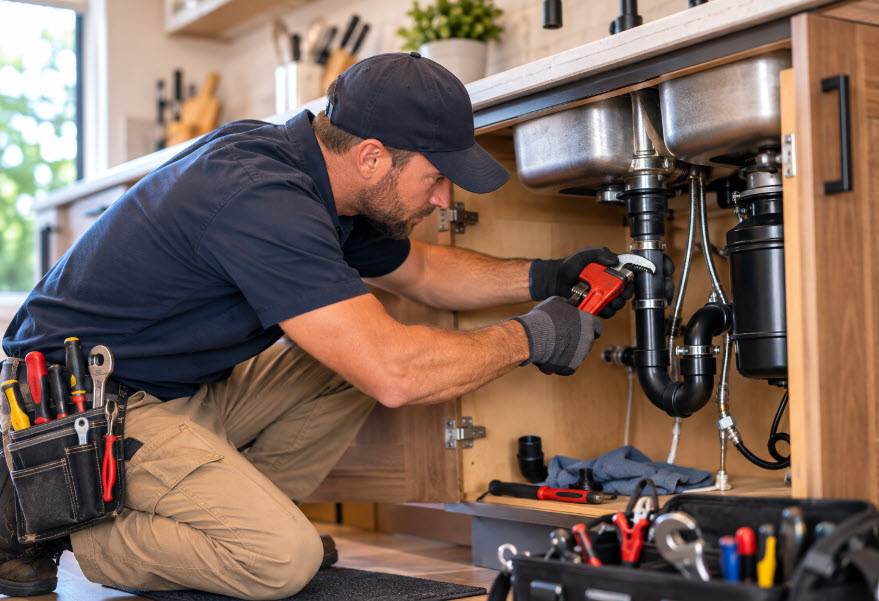
Plumbing contractors provide an essential service to homeowners, property managers and businesses throughout Colorado, handling everything from routine repairs and fixture replacements to larger installations, remodels and commercial plumbing projects. From independent plumbers serving local neighborhoods to established companies working throughout Denver, Colorado Springs, Fort Collins, Castle Rock and communities across the Front Range, these businesses are trusted to work on systems where even a small mistake can lead to significant property damage.
Running a plumbing business also comes with risks that are very different from those of a typical service company. Plumbers work inside customers’ homes and commercial buildings, use specialized tools, drive between job sites and perform work involving water lines, drains, fixtures, appliances and sometimes gas systems. A burst connection, damaged flooring, employee injury, stolen tools or vehicle accident can quickly become expensive. The right insurance can help protect your business while also making it easier to provide certificates of insurance, meet contract requirements and add property owners or general contractors as additional insureds when required.
How Much Does It Cost to Insure a Plumbing Business in Colorado?
In 2026, a smaller Colorado plumbing contractor may pay approximately $700 to $4,000 per year for general liability insurance, although premiums can fall outside this range. Current plumbing-industry pricing shows many small contractors paying roughly $56 to $333 per month for general liability, with an average near $76 per month for eligible businesses. A self-employed plumber performing lower-risk residential service and repair work will generally pay less than a larger company handling commercial projects, employees, subcontractors and higher-value installations.
A broader plumbing insurance program can cost approximately $4,000 to $15,000 or more per year once commercial auto, workers compensation, tools and equipment, property coverage and higher liability limits are included. Pricing is influenced by annual revenue, payroll, employee count, claims history, vehicle use, subcontractor costs, coverage limits and the type of plumbing work performed. New construction, larger commercial jobs, gas piping, sewer or excavation work and major remodels may be viewed differently by insurers than basic residential service calls. Because plumbing businesses can vary significantly in size and scope, an accurate quote should reflect the work your company actually performs.
What Type of Insurance Coverage Does a Plumbing Contractor Need?
Most Colorado plumbing contractors should begin with general liability insurance. This coverage can help with third-party claims involving bodily injury, accidental property damage and certain claims connected to completed work. For a plumber, one of the biggest concerns is water damage. A loose fitting, improperly installed fixture or damaged pipe can lead to expensive damage to walls, flooring, cabinets and other property. General contractors, commercial clients and property managers may also require proof of liability insurance before allowing work to begin.
Plumbers who carry power tools, drain machines, diagnostic equipment and other gear from one job to another should also consider inland marine insurance or tools and equipment coverage. This can help protect eligible business equipment while it is being transported, stored away from the primary business location or used at customer properties. Companies that use service vans, pickups or other vehicles for work should also consider commercial auto insurance, since personal auto policies may not properly cover business use.
Colorado plumbing companies with employees will generally need workers compensation insurance. Plumbing work can involve lifting, confined spaces, slippery surfaces, ladders and repetitive physical activity, all of which can lead to employee injuries. Depending on the business, additional protection may include commercial umbrella insurance, commercial property, business income, pollution liability, professional liability or builders risk coverage for certain projects.
What Do Insurance Companies Look at When Insuring a Plumbing Contractor?
Insurance companies usually want detailed information about the type of plumbing work being performed. Underwriters may ask what percentage of the business is residential versus commercial, whether the company performs service and repair or new construction, whether it handles gas lines, sewer work, excavation or major remodels and how large the typical project is. They may also review years in business, owner experience, prior claims and the maximum size or value of jobs performed.
Subcontractors and job-site controls are also important. Carriers may ask whether subcontractors carry their own general liability and workers compensation coverage, whether written contracts are used and whether certificates of insurance are collected. Colorado construction businesses also face additional workers compensation considerations when subcontractors are involved, so proper documentation matters. Having organized safety procedures, accurate payroll and revenue information and a strong claims history can make a plumbing business easier for carriers to evaluate.
Insurance Companies That May Cover Colorado Plumbing Contractors
Castle Rock Insurance works alongside specialty partners that can help eligible plumbing contractors explore coverage through multiple commercial insurance markets. Depending on the services performed, annual revenue, payroll, vehicle use, claims history and subcontractor exposure, options may be available through carriers such as NEXT Insurance, Progressive Commercial and other standard or specialty contractor markets. NEXT specifically offers plumber-focused packages that can include general liability, workers compensation, tools and equipment, commercial property and commercial auto coverage. Because carrier appetite can vary based on the type and size of plumbing work performed, Castle Rock Insurance and its partners can help connect contractors with licensed insurance professionals who can compare available options based on the actual operation.
Get Your Plumbing Business Insured Today!
Whether you operate as an independent plumber or manage a growing plumbing company with employees, service vehicles and larger projects, Castle Rock Insurance and its partners can help you explore insurance options for your liability, tools, vehicles and employees. Contact us today to compare available coverage options and request a Colorado plumbing contractor insurance quote.