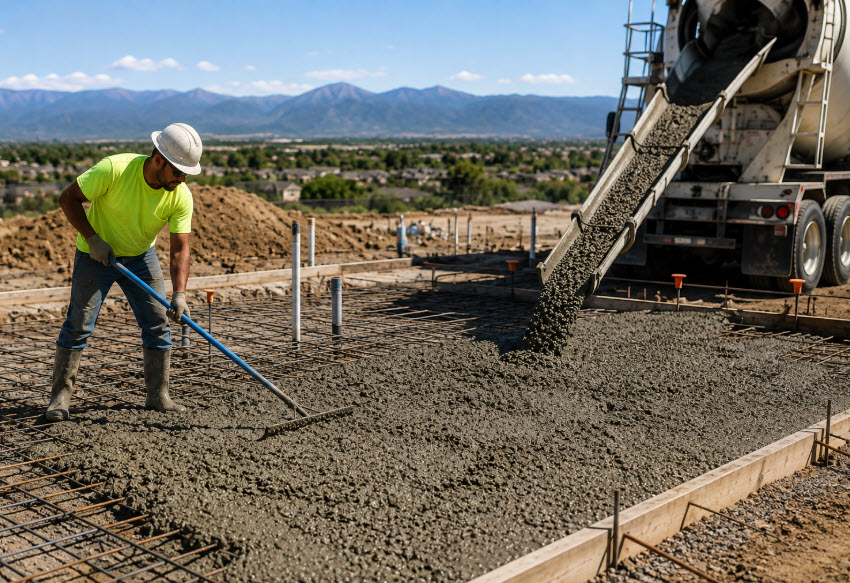
Concrete contractors work throughout Colorado on residential and commercial projects ranging from driveways, patios and sidewalks to foundations, footings, retaining walls, parking areas and larger structural concrete projects. From independent contractors serving local neighborhoods to established concrete companies working throughout Denver, Colorado Springs, Fort Collins, Castle Rock and communities across the Front Range, these businesses regularly work around customer property, active construction sites, employees, commercial vehicles and expensive equipment.
The insurance needs of a concrete contractor can vary significantly based on the work being performed. Residential flatwork presents a different exposure than foundations, structural concrete or large commercial projects. Property damage, employee injuries, equipment losses, vehicle accidents and completed work can all create substantial financial exposure. The right insurance can help protect the business while also helping contractors provide certificates of insurance, meet general contractor requirements and qualify for larger projects.
How Much Does Concrete Contractor Insurance Cost in Colorado?
In 2026, a smaller Colorado concrete contractor may pay approximately $800 to $3,000 per year for general liability insurance, although premiums can fall outside this range. Contractors focused primarily on residential flatwork such as driveways, sidewalks and patios may fall toward the lower end, while companies performing foundations, structural concrete or larger commercial projects may pay more.
A broader concrete contractor insurance program may cost approximately $4,000 to $20,000 or more per year once workers compensation, commercial auto, tools and equipment, higher liability limits and other coverage are included. Larger concrete companies with substantial payroll, multiple crews, heavy equipment, concrete pumps or commercial vehicles can pay considerably more. Pricing depends on annual revenue, payroll, project size, claims history, equipment values, vehicle use, subcontractor costs and the specific concrete work performed.
What Insurance Does a Concrete Contractor Need?
Most Colorado concrete contractors should begin with general liability insurance. This coverage can help with certain third-party bodily injury and accidental property damage claims. Examples could include equipment damaging customer property, a visitor being injured around an active job site or completed work contributing to covered property damage.
Concrete contractors may also own saws, compactors, mixers, generators, skid steers, finishing equipment and other machinery that moves between projects. Tools and equipment insurance or contractors equipment coverage can help protect eligible equipment against covered losses while it is transported, stored or used at job sites.
Companies operating pickups, dump trucks, service vehicles or other road vehicles should also consider commercial auto insurance. Colorado concrete contractors with employees will generally need workers compensation insurance. Contractors taking on larger commercial projects may also need commercial umbrella insurance when contracts require liability limits above their underlying policies.
Does the Type of Concrete Work Affect Insurance?
Yes. One of the first things an insurance company may want to know is exactly what type of concrete work the business performs. Underwriters may ask what percentage of revenue comes from driveways, sidewalks, patios, curbs and gutters, parking areas, foundations, footings, retaining walls, concrete repair or structural concrete.
Maximum project size and the percentage of residential versus commercial work can also affect underwriting. A contractor primarily pouring residential flatwork presents a different exposure than a company performing foundations or structural concrete on large commercial projects.
Does Structural Concrete Affect Contractor Insurance?
Structural concrete can create greater completed-operations exposure because the contractor’s work may become part of a foundation, footing, structural slab, retaining wall or other important component of a building or structure. Insurance companies may therefore ask whether the contractor performs structural work and the maximum size and value of those projects.
Concrete contractors should accurately describe their operations when requesting coverage. A company focused on sidewalks and driveways may qualify for insurance markets that are different from those available to a contractor performing larger structural or commercial concrete work.
Does Concrete Pumping Affect Insurance?
Concrete contractors that own or operate concrete pumps should disclose those operations when requesting insurance. Pump trucks, boom equipment and pumping operations can create additional liability, equipment and commercial auto exposures, particularly when equipment is operating around buildings, employees and other contractors.
Insurance companies may also want to know whether the company pumps concrete only for its own projects or provides pumping services to other contractors. Dedicated concrete pumping operations can be underwritten differently from conventional forming, pouring and finishing work.
How Do Commercial Projects Affect Concrete Contractor Insurance?
Commercial concrete projects can involve larger contract values, additional workers and more demanding insurance requirements. General contractors, developers and property owners may require specific general liability limits, workers compensation, commercial auto coverage, additional insured endorsements or umbrella coverage before work begins.
Contractors should review insurance requirements before bidding or accepting a project. Having appropriate coverage and endorsements in place can make it easier to provide certificates of insurance and avoid delays when starting commercial work.
How Do Subcontractors Affect Concrete Contractor Insurance?
Concrete contractors may subcontract excavation, pumping, trucking, reinforcing steel or other portions of a project. Insurance companies may ask how much work is subcontracted and whether subcontractors maintain their own general liability and workers compensation insurance.
Written subcontractor agreements and current certificates of insurance can be important for underwriting, policy audits and commercial contract requirements. Contractors should accurately disclose subcontracted work when applying for coverage.
What About Silica Exposure?
Concrete cutting, sawing, grinding and drilling can generate respirable crystalline silica. Contractors whose employees perform these operations should follow applicable OSHA requirements for controlling employee exposure, including appropriate engineering controls and work practices.
From an insurance perspective, these operations are particularly relevant to employee safety and workers compensation exposure. Contractors should accurately describe significant concrete cutting, grinding, drilling or similar operations when requesting coverage.
What Do Insurance Companies Look at When Insuring a Concrete Contractor?
Insurance companies may consider annual revenue, payroll, years in business, employee experience, claims history, equipment values, commercial vehicles, subcontractor costs and the types of projects performed. Underwriters may also ask about maximum project size, structural work, concrete pumping and the percentage of residential and commercial operations.
Providing an accurate description of the business is especially important for concrete contractors because carrier appetite can vary considerably between residential flatwork, foundations, structural concrete, pumping and larger commercial projects.
Insurance Companies That May Cover Colorado Concrete Contractors
Castle Rock Insurance is a Colorado insurance agency that works with its partners to help concrete contractors explore coverage through standard and specialty commercial insurance markets. Depending on the contractor’s operations, project size, payroll, equipment, vehicles, structural work, subcontractor exposure and claims history, options may be available through carriers such as Travelers and other construction-focused insurance markets that consider concrete contractors. Carrier appetite can vary between residential flatwork, foundations, structural concrete and larger commercial operations, so Castle Rock Insurance and its partners can help review the business and compare available coverage options.
Get Your Colorado Concrete Contractor Insurance Quote
Whether your company pours residential driveways and patios, installs foundations and footings or handles larger commercial concrete projects, Castle Rock Insurance and its partners can help you explore insurance options for your liability, employees, vehicles and equipment. Contact us today to compare available coverage options and request a Colorado concrete contractor insurance quote.