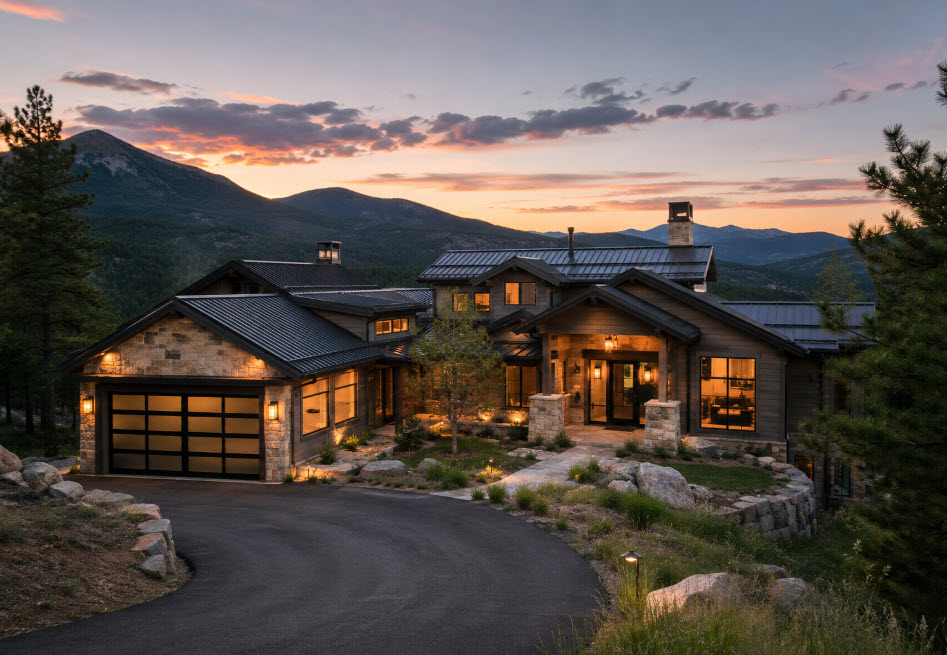
Colorado has a wide range of luxury and high-value homes, from Castle Pines and higher-end communities throughout Castle Rock to Cherry Hills Village, Greenwood Village and Cherry Creek. High-value properties are also common in Boulder, Washington Park, the Front Range foothills and mountain communities such as Aspen, Vail and Breckenridge.
These homes often feature custom construction, premium finishes, larger floor plans and specialty materials that can be considerably more expensive to rebuild than a standard home. High-value homeowners insurance should therefore be designed around the property’s true reconstruction cost, valuable contents, liability exposure and Colorado-specific risks.
How Much Does High-Value Home Insurance Cost in Colorado?
Pricing varies widely. For comparison, many standard Colorado homeowners policies fall around $4,200 to $5,200 per year in 2026. Higher-value homes often cost more because of larger dwelling limits, custom construction and greater catastrophe exposure.
Many luxury Colorado homes may fall around $6,000 to $15,000+ per year, while large custom homes, properties with several million dollars of reconstruction exposure or significant hail or wildfire risk can reach $15,000 to $25,000 or more annually. Difficult mountain or foothill properties may exceed those figures when carrier availability is limited.
The home’s market value is not the main number insurers use. What matters more is what it could cost to reconstruct the property after a major loss, including materials, labor, architectural details and debris removal.
Replacement Cost Matters More on a Luxury Home
Custom cabinetry, stonework, hardwood flooring, specialty windows, high-end kitchens and unique architectural details can make a luxury home much more expensive to rebuild per square foot. The Insurance Information Institute recommends basing dwelling coverage on reconstruction cost rather than real-estate value.
It is also worth reviewing whether extended or guaranteed replacement cost is available. These provisions can provide additional protection when rebuilding expenses rise beyond the stated dwelling limit after a major loss. Major renovations and additions should also be reported so the policy keeps pace with the home.
What Affects Luxury Home Insurance Rates in Colorado?
Insurers may consider reconstruction cost, roof age and material, hail exposure, wildfire risk, prior claims, construction type, property location, fire protection, home systems and selected deductibles. Larger properties may also require additional underwriting for detached structures, pools, acreage, private roads or difficult emergency access.
Claims history matters too. Repeated water, hail or liability losses can increase pricing or reduce carrier options. High-value insurers may also evaluate the home’s maintenance and protective systems before offering coverage.
Colorado Hail and Your Roof Matter
Hail remains one of Colorado’s biggest property insurance concerns, particularly along the Front Range. On a large luxury home, roof losses can become especially expensive, which makes roof age, condition and material important underwriting factors.
A newer or impact-resistant roof may improve the risk profile, while an older roof can lead to higher deductibles, different settlement provisions or fewer carrier choices. Our guide explains why your roof matters for Colorado homeowners insurance.
Colorado’s SB26-155 homeowners insurance law also places greater emphasis on resilient roofing and reducing hail and wind losses. Improvements do not guarantee a lower premium, but stronger roofing can improve the overall risk presented to insurers.
Wildfire Exposure Can Limit Carrier Options
Luxury homes in foothill and mountain areas can face a very different insurance market from suburban properties. Insurers may consider vegetation, slope, road access, proximity to fire protection and surrounding wildfire exposure.
Defensible space, maintained vegetation and ember-resistant construction features can help reduce risk, although underwriting requirements vary. Some properties may still require a specialty or excess-and-surplus-lines solution when standard carriers are unwilling to insure the exposure.
Water Damage Prevention Is Especially Important
Water losses can become extremely expensive in homes with hardwood floors, custom cabinetry, finished basements and other premium materials. Whole-home leak detection, automatic water shutoff systems and monitored alarms can help reduce the severity of a loss and may qualify for underwriting credits with some insurers.
Protecting Jewelry, Art and Other Valuables
Luxury households often own property that may exceed the special limits built into a standard homeowners policy. Jewelry, watches, fine art, collectibles and other valuables may need to be scheduled or insured separately.
The Insurance Information Institute recommends reviewing special limits for valuable possessions and adding coverage when needed. Updated inventories and appraisals can make this process much easier.
Higher Liability Limits and Umbrella Insurance
High-value homeowners should also pay close attention to liability protection. Pools, recreational features, household employees, teenage drivers, multiple residences and substantial assets can all increase potential exposure.
Many affluent households pair higher home and auto liability limits with a Colorado umbrella insurance policy, which can provide an additional layer of liability protection above qualifying underlying policies.
Bundling Can Improve More Than the Price
Placing the home, autos and umbrella together can sometimes improve discounts while also making the overall account more attractive to high-value insurers. Some carriers prefer to write the complete household rather than a standalone luxury home.
Our guide to home, auto and umbrella insurance bundling explains how combining policies can affect both pricing and carrier options.
Which Carriers Insure High-Value Homes?
Chubb and PURE are among the better-known carriers serving high-net-worth households and may offer broader coverage for qualifying custom homes, valuable property and complex personal insurance accounts.
Other standard and specialty insurers may also write high-value Colorado homes depending on reconstruction cost, location, roof condition, wildfire exposure, claims history and the rest of the household account. A newer suburban luxury home can have very different carrier options from a similarly valued mountain property.
How to Reduce the Cost of High-Value Home Insurance
The best savings usually come from improving the overall risk rather than stripping away important coverage. Opportunities can include bundling policies, maintaining or upgrading the roof, installing leak-detection and monitored alarm systems, selecting appropriate deductibles and keeping reconstruction estimates accurate.
A favorable claims history can help as well. For smaller losses, it can be worth considering the deductible and potential long-term insurance impact before filing a claim that is only modestly above the out-of-pocket amount.
Compare High-Value Home Insurance in Colorado
The right luxury homeowners policy should account for the home’s reconstruction cost, custom features, valuables, liability exposure and Colorado risks such as hail and wildfire.
Castle Rock Insurance and its partners help Colorado homeowners compare traditional, high-value and specialty markets for custom homes, luxury residences and mountain properties. The goal is to find coverage that fits the property and household rather than forcing a complex home into a standard policy.