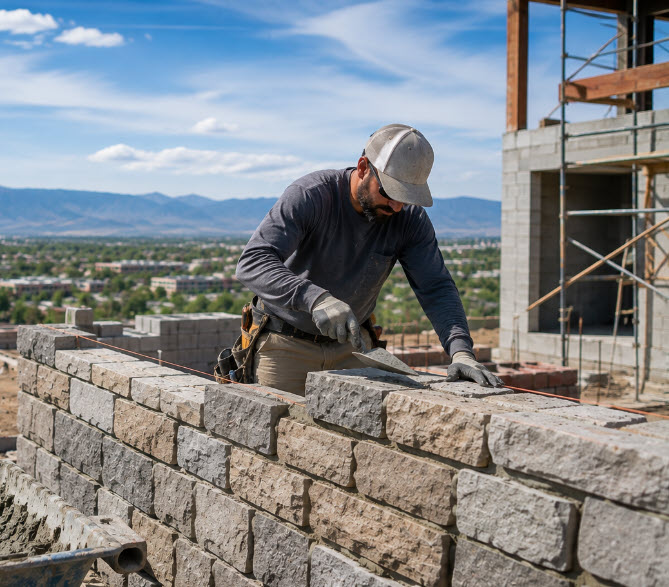
Masonry contractors work throughout Colorado building and repairing brick, block and stone features for homes, commercial buildings and larger construction projects. From residential brick veneer and stonework to retaining walls, structural masonry and commercial projects, masons regularly work with heavy materials, cutting equipment, scaffolding and valuable customer property.
Those operations create risks that can vary substantially from one masonry business to another. Falling materials can damage property, employees can be injured while lifting block or working at height and problems with completed structural work can lead to expensive claims. General contractors, developers and property owners may also require specific insurance limits and certificates of insurance before work begins.
How Much Does Masonry Contractor Insurance Cost in Colorado?
In 2026, a smaller Colorado masonry contractor may pay approximately $700 to $3,000 per year for general liability insurance, although premiums can fall outside this range. Current industry data places average masonry contractor general liability premiums around $1,000 per year. Residential veneer, repairs and lower-height work may cost less to insure than structural masonry, larger commercial projects or operations involving substantial scaffolding and elevated work.
A broader masonry contractor insurance program may cost approximately $4,000 to $20,000 or more per year when workers compensation, commercial auto, tools and equipment, higher liability limits and other coverage are included. Larger companies with multiple crews, substantial payroll, commercial vehicles or major projects can pay considerably more. Revenue, payroll, project size, working height, structural work, claims history, subcontractors and vehicle use can all affect pricing.
What Insurance Does a Colorado Masonry Contractor Need?
Most masonry contractors should begin with general liability insurance, which can help with certain third-party bodily injury and accidental property damage claims. Masonry businesses may also need tools and equipment coverage for eligible saws, mixers, grinders and other movable equipment, plus commercial auto insurance for company-owned pickups, vans, dump trucks or other road vehicles.
Colorado masonry businesses with employees will generally need workers compensation insurance. Larger commercial contracts may also require higher liability limits, additional insured endorsements or commercial umbrella insurance. The appropriate combination depends on the contractor’s employees, vehicles, equipment, projects and contractual requirements.
What Does Colorado Require of Masonry Contractors?
Colorado does not currently impose one universal traditional statewide masonry contractor license. Contractor licensing and registration can instead depend on the city or county where the work is performed, so a masonry contractor working in Denver, Castle Rock, Aurora or another Colorado jurisdiction should verify applicable local licensing, registration and permitting requirements before beginning work.
Workers compensation is different because it is a statewide requirement. Colorado employers with one or more full- or part-time employees generally must maintain workers compensation coverage, subject to limited exemptions. The Colorado Department of Labor and Employment provides current guidance on employer coverage requirements and independent contractors.
There is also no single statewide general liability limit that applies to every masonry business. Instead, liability insurance requirements may come from local contractor-registration rules, general contractors, developers, property owners or individual project contracts. Depending on the job, a contractor may be asked for a certificate of insurance, additional insured status, a waiver of subrogation or higher liability limits.
What Do Insurance Companies Look at When Insuring Masonry Contractors?
Insurance companies generally want to know exactly what kind of masonry work the business performs. Underwriters may ask what percentage of revenue comes from brick, concrete block, natural or manufactured stone, veneer, retaining walls, chimneys, repairs and structural masonry. They may also consider annual revenue, payroll, maximum project size, residential versus commercial work, employee experience, claims history, subcontractor use and commercial vehicles.
Working height can be especially important. A mason completing ground-level repairs or residential veneer presents a different exposure than a contractor regularly working from scaffolding on multi-story commercial buildings. Insurers may therefore ask about maximum working height, scaffold use and the percentage of work performed above ground level.
How Do Structural Masonry and Retaining Walls Affect Insurance?
Structural masonry can create greater completed-operations exposure because the contractor’s work may become part of a load-bearing wall, foundation or other important building component. Retaining walls can introduce additional concerns involving wall height, soil pressure, drainage, excavation and structural design. Contractors should accurately disclose these operations so the insurance company understands the work being performed.
This distinction matters because a contractor installing decorative stone veneer or performing residential repairs can present a very different risk from a company constructing structural CMU walls or large retaining walls. If the contractor also assumes engineering or design responsibility, additional professional liability considerations may apply.
What About Scaffolding, Silica and Employee Safety?
Masonry contractors frequently work from ladders or scaffolding and handle heavy brick, block and stone, making employee injuries an important workers compensation exposure. Cutting, grinding or drilling masonry materials can also generate respirable crystalline silica. Contractors should follow applicable OSHA safety requirements and maintain appropriate procedures for elevated work, material handling and silica-producing operations. The Occupational Safety and Health Administration provides specific guidance for controlling silica exposure in construction.
How Do Subcontractors and Commercial Contracts Affect Coverage?
Masonry companies may subcontract excavation, scaffolding, trucking or specialty portions of a project. Insurance companies may ask how much work is subcontracted and whether subcontractors maintain their own general liability and workers compensation coverage. Written subcontractor agreements and current certificates of insurance can also become important during underwriting and policy audits.
Commercial masonry contracts may impose additional insurance requirements, including specific general liability limits, commercial auto, workers compensation, additional insured endorsements, waivers of subrogation and umbrella coverage. Reviewing these requirements before bidding or beginning a project can help prevent problems when a general contractor or property owner requests proof of coverage.
Insurance Companies That May Cover Colorado Masonry Contractors
Castle Rock Insurance is a Colorado insurance agency that works with its partners to help masonry contractors explore coverage through standard and specialty commercial insurance markets. Depending on the contractor’s operations, payroll, project size, working height, structural work, vehicles, subcontractors and claims history, options may be available through carriers such as Travelers and other construction-focused insurance markets. Travelers maintains a dedicated masonry contractor insurance program for masonry, stone setting and other stonework, including options for general liability, workers compensation, commercial auto and umbrella coverage.
Get a Colorado Masonry Contractor Insurance Quote
Whether your company performs brick and block work, stone veneer, retaining walls, repairs or larger structural masonry projects, Castle Rock Insurance and its partners can help you explore insurance options for your liability, employees, vehicles and equipment. Contact us today to compare available coverage options and request a Colorado masonry contractor insurance quote.