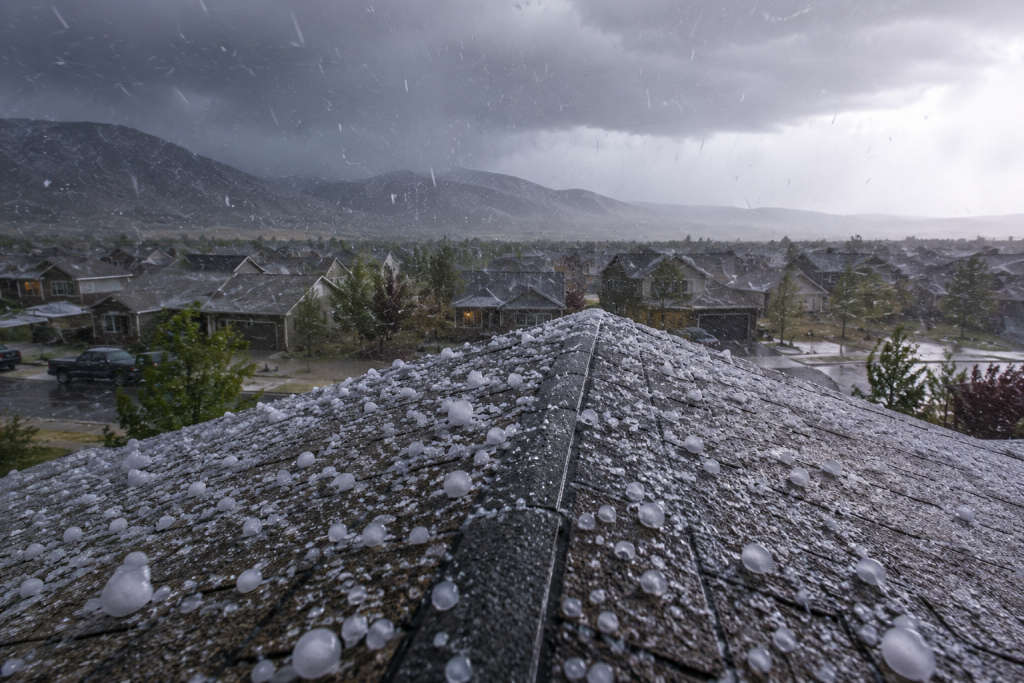
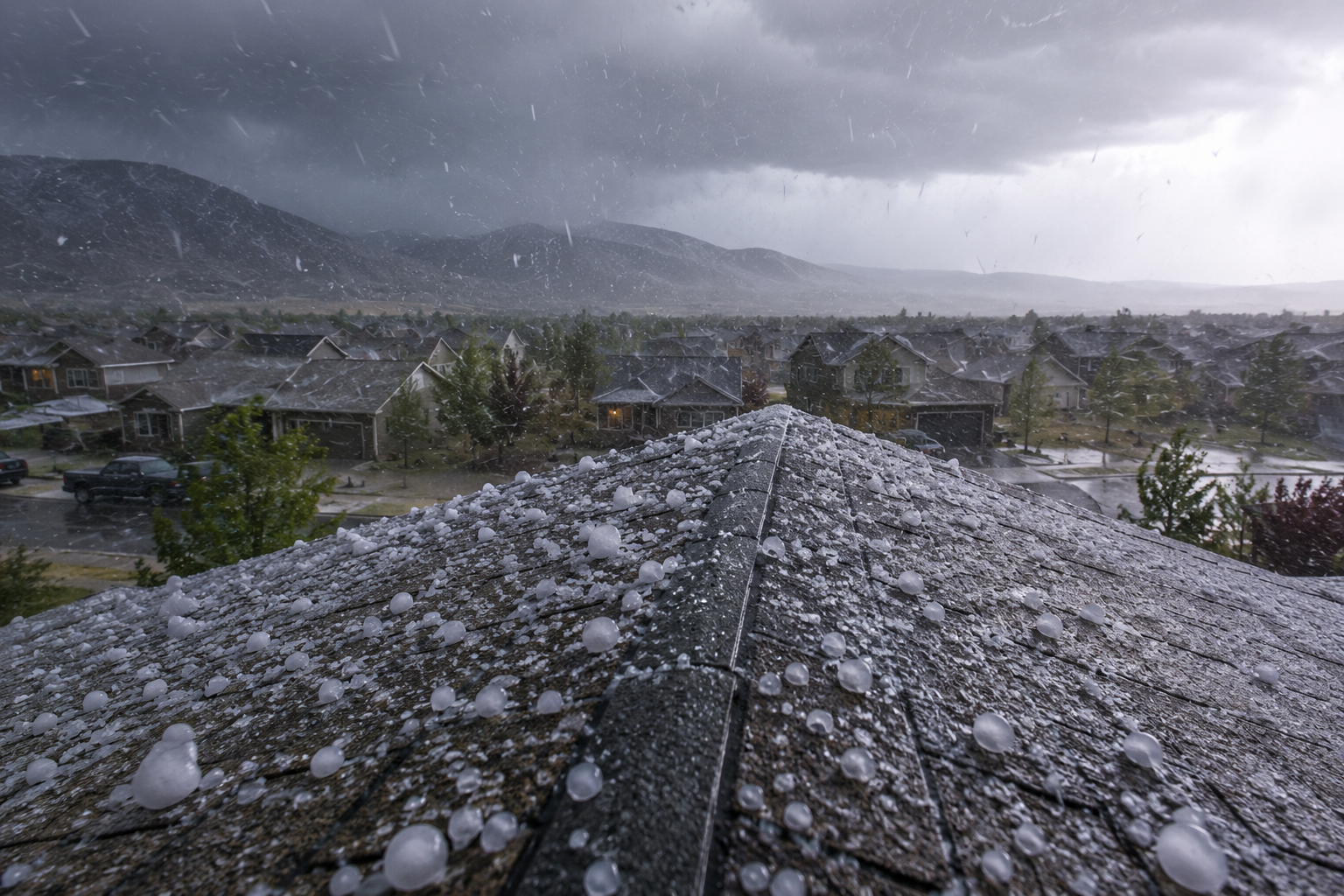
Colorado homeowners deal with plenty of severe weather, but few hazards affect homes, vehicles and insurance costs as consistently as hail. From the Denver metro area and Front Range to Colorado Springs and the Eastern Plains, one strong thunderstorm can damage thousands of roofs, vehicles, windows and exterior surfaces in a matter of hours.
Hail affects more than the repair bill after a storm. It can influence homeowners insurance rates, wind and hail deductibles, roof underwriting and the types of roofing materials insurance companies prefer. In 2026, those issues have become an even bigger part of Colorado’s homeowners insurance market as the state looks for ways to reduce future losses and make homes more resilient.
If you are trying to understand the overall cost of coverage, our guide to Colorado homeowners insurance costs in 2026 explains how hail fits alongside wildfire exposure, rebuilding costs, roof condition, previous claims and other major pricing factors.
Why Does Colorado Get So Much Hail?
Colorado sits in one of the country’s most active regions for severe thunderstorms and large hail. The geography of the Front Range and eastern Colorado helps create conditions that support powerful thunderstorms, particularly during the warmer months.
Hail forms when strong thunderstorm updrafts carry water droplets high enough into the atmosphere to freeze. The stones can continue growing as they move through the storm until they become too heavy for the updraft to support. When large hail reaches the ground, roofs, siding, skylights, windows and vehicles can take the brunt of the impact.
The National Weather Service severe weather climatology provides a closer look at Colorado’s history of hail, thunderstorms and other damaging weather.
Hail Is a Major Part of Colorado’s Insurance Problem
Wildfire receives a lot of attention in Colorado, but hail can have an even broader effect on homeowners insurance across much of the state. Unlike wildfire exposure, which is concentrated more heavily in certain foothill and mountain areas, hail can affect many of Colorado’s most populated communities along the Front Range.
Colorado officials have estimated that hail risk can account for approximately 26% to 54% of homeowners insurance premiums depending on the county, compared with approximately 1% to 25% for wildfire risk depending on location. The State of Colorado’s homeowners insurance roadmap provides additional context about how severe weather and catastrophe risks are affecting insurance costs.
That does not mean half of your individual insurance premium is literally a separate hail charge. It illustrates how heavily hail losses can influence the broader pricing of homeowners insurance in certain parts of Colorado.
Colorado Has a History of Expensive Hailstorms
Colorado’s hail problem is not theoretical. Major storms have caused enormous insured losses, particularly when large hail moves through densely populated areas along the Front Range.
The May 2017 Denver-area hailstorm remains one of the clearest examples. It produced extremely large hail across portions of the metro area and caused billions of dollars in damage to homes, vehicles and businesses. Colorado has continued to experience damaging storms since then, which is why insurers treat hail as a recurring catastrophe exposure rather than an unusual event.
Why Hail Has Such a Big Effect on Homeowners Insurance
A single hail-producing thunderstorm can affect thousands of properties in a relatively short period. Roofs are especially important because replacement can be expensive, and widespread roof damage can generate a large number of insurance claims from the same storm.
Those losses can eventually influence pricing and underwriting across a much larger geographic area. This is one reason a Colorado homeowner can experience a rate increase even without personally filing a hail claim. Insurance companies look at the overall loss experience of the areas where they insure homes, not just the claims history of one household.
Your Roof Matters More Than Ever
Colorado insurers increasingly pay close attention to roof age, material, condition and impact resistance. A newer roof in good condition may provide more carrier options, while an older or deteriorated roof can result in tighter underwriting, different roof settlement provisions or larger deductibles.
Roofing material matters too. Asphalt shingles, metal, concrete or clay tile and synthetic roofing systems can perform differently when exposed to hail. Our detailed guide explains how roof age and material affect Colorado homeowners insurance, including some of the ways underwriters evaluate different roofing systems.
Does a Class 4 Roof Protect Against Hail?
Class 4 impact-resistant roofing is commonly considered in Colorado because it has achieved a high impact classification under recognized testing standards. Some insurance companies may offer discounts or more favorable underwriting for qualifying impact-resistant roofing products.
However, Class 4 does not mean hail-proof. Product design, installation quality, roof age and the severity of the storm still matter. Very large hail can damage even highly rated roofing materials.
The Insurance Institute for Business & Home Safety conducts more realistic hail testing designed to evaluate how roofing products perform beyond basic laboratory classifications. Homeowners considering a roof replacement can review IBHS hail research and roof-performance guidance when comparing materials.
Colorado’s SB26-155 Is Putting More Focus on Resilient Roofs
Colorado is now treating stronger roofs as part of the larger homeowners insurance affordability problem. Instead of focusing only on insurance rates after losses occur, the state is also trying to reduce how much damage future hail and windstorms cause in the first place.
In 2026, Colorado passed Senate Bill 26-155, which creates the Strengthen Colorado Homes Enterprise within the Colorado Division of Insurance. One of the biggest parts of the new law is a grant program intended to help qualifying Colorado homeowners install more resilient roofing systems. At least 85% of certain enterprise fee revenue is required to go toward homeowner grants for qualifying resilient roof improvements.
The program will not simply treat every roof marketed as “hail resistant” as eligible. The enterprise is responsible for establishing qualifying resilient-roof standards, contractor requirements and an application process. Primary residences will receive priority, while factors such as income, roof age, home size, local building codes and historical exposure to extreme weather may also be considered.
SB26-155 is also important from an insurance perspective. Colorado plans to collect more information about homes with resilient roofs, including applicable insurance discounts and the frequency and severity of hail and wind claims on homes with and without qualifying roof systems. If those roofs consistently produce fewer or less expensive claims, that data could eventually support stronger insurance incentives and more favorable underwriting.
Homeowners should not assume the law guarantees a free roof or an immediate reduction in homeowners insurance premiums. The program still needs to be implemented and the final standards will determine which roofing systems and homeowners qualify. Our complete guide to Colorado SB26-155 and the new resilient roof program explains how the grants are expected to work, what types of roofs may qualify and what the law could mean for homeowners insurance over time.
Pay Close Attention to Your Wind and Hail Deductible
One of the most important parts of a Colorado homeowners policy is the wind and hail deductible. Some policies use a fixed-dollar deductible, while others apply a separate percentage deductible to wind or hail losses.
A percentage deductible can create a much larger out-of-pocket expense than homeowners expect because it may be calculated from an insured value shown on the policy rather than from the amount of the claim itself. This is why comparing homeowners insurance should involve more than looking at the annual premium. A policy that costs slightly less could leave you responsible for thousands of dollars more after a major hailstorm.
Replacement Cost vs. Actual Cash Value Matters Too
Homeowners should also understand how covered roof damage would be settled. Replacement cost coverage generally pays the cost to repair or replace covered property subject to policy terms, limits and deductibles, while actual cash value accounts for depreciation.
This difference can become especially important as a roof gets older. The National Association of Insurance Commissioners explains replacement cost and actual cash value and why homeowners should understand which approach their policy uses before a loss occurs.
What Should You Do Before Colorado Hail Season?
Start by knowing the age, material and general condition of your roof. If you recently purchased your home and do not know when the roof was installed, an inspection report, roofing invoice or building permit may help establish its age.
Review your homeowners policy at the same time. Know your wind and hail deductible, understand how roof claims are settled and check whether the policy includes special provisions involving cosmetic damage or older roofing materials. If you replace your roof, keep the invoice, installation date, product information and warranty documentation. Proof of a qualifying impact-resistant roof can be useful when an insurance agent compares coverage later.
What Should You Do After a Hailstorm?
After the storm has safely passed, look for obvious signs of damage from the ground rather than climbing onto the roof yourself. Broken shingles or tiles, damaged gutters, dented vents, cracked skylights and debris around the property can all indicate that a professional inspection may be appropriate.
If you suspect meaningful damage, consider having a qualified roofing professional inspect the property. Take photographs of visible damage and keep copies of inspection reports and repair estimates. Before filing a relatively small claim, it can also be helpful to understand your deductible and the expected repair cost. If the damage is below or only slightly above the deductible, filing a claim may provide little insurance benefit.
Be Careful With Storm-Chasing Contractors
Large Colorado hailstorms often bring roofing contractors into affected neighborhoods. Many are legitimate businesses, but homeowners should still take time to understand who they are hiring, what work is being proposed and what they are signing.
Be cautious about anyone promising that insurance automatically provides a “free roof” or pressuring you to sign immediately. Your insurance claim and roofing contract are separate matters, and homeowners remain responsible for their deductible and the terms of the contractor agreement. This is especially important as SB26-155 develops because homeowners should verify the actual grant requirements rather than relying solely on contractor advertising.
Don’t Forget About Your Vehicles
Hail can damage thousands of vehicles during the same storm. When comprehensive coverage is included on an auto policy, hail damage is generally handled under that coverage subject to the policy terms and deductible.
If you insure both your home and vehicles, it may be worth looking at the total household insurance cost rather than shopping each policy independently. Our guide to home and auto insurance bundle discounts explains how combining policies can affect pricing and carrier options.
Hail Isn’t the Only Colorado Catastrophe Risk
Some Colorado homes face both significant hail exposure and elevated wildfire risk. The two hazards are underwritten differently, which means installing a stronger roof may improve only one part of the property’s overall insurance profile.
For homes in foothill and mountain communities, insurers may also consider vegetation, defensible space, slope, road and driveway access and proximity to fire protection. Homeowners having difficulty finding coverage can learn more about Colorado fire zone and wildfire insurance.
Colorado also changed how certain wildfire risk models and mitigation measures are handled in 2026. Our guide to Colorado’s HB25-1182 wildfire insurance law explains what changed and what homeowners should know about wildfire scoring, transparency and property mitigation.
Can You Lower Your Insurance Costs by Reducing Hail Risk?
Potentially. A newer roof, qualifying impact-resistant materials and accurate documentation may improve pricing or eligibility with some insurers. A higher deductible may also lower the annual premium, although that means accepting more of the financial risk yourself when a loss occurs.
One of the biggest opportunities is simply comparing carriers. Insurance companies do not all have the same roof-age guidelines, impact-resistant roof discounts, deductible structures or appetite for different parts of Colorado. An older roof that creates a major issue with one company may be treated differently by another.
If you want a broader look at current rates and ways to save, our guide to homeowners insurance costs in Colorado for 2026 covers the major factors affecting premiums statewide.
What Should Colorado Homeowners Take Away From the Hail Problem?
Hail is not simply an occasional home-repair problem in Colorado. It is one of the risks shaping homeowners insurance premiums, roof requirements, deductibles and underwriting throughout much of the state. Colorado’s new focus on resilient roofs through SB26-155 reinforces how important the roof itself has become to the insurance conversation.
The most useful steps are fairly straightforward: know the age and material of your roof, understand your wind and hail deductible, know how roof losses would be settled and keep documentation of any roofing upgrades. If you are considering replacing an older roof, also keep an eye on the Strengthen Colorado Homes program created by SB26-155 as eligibility and grant requirements are finalized.
Get a Colorado Homeowners Insurance Quote
Castle Rock Insurance and its partners work with homeowners throughout Colorado to compare homeowners insurance options from multiple insurance companies. We can help you review how different carriers evaluate your roof, hail exposure, deductibles and overall property risk.
Whether you are dealing with a large renewal increase, replacing an older roof, purchasing a home or simply reviewing your current coverage, comparing both the price and the details of the policy can help you make a better-informed decision before the next Colorado hailstorm.