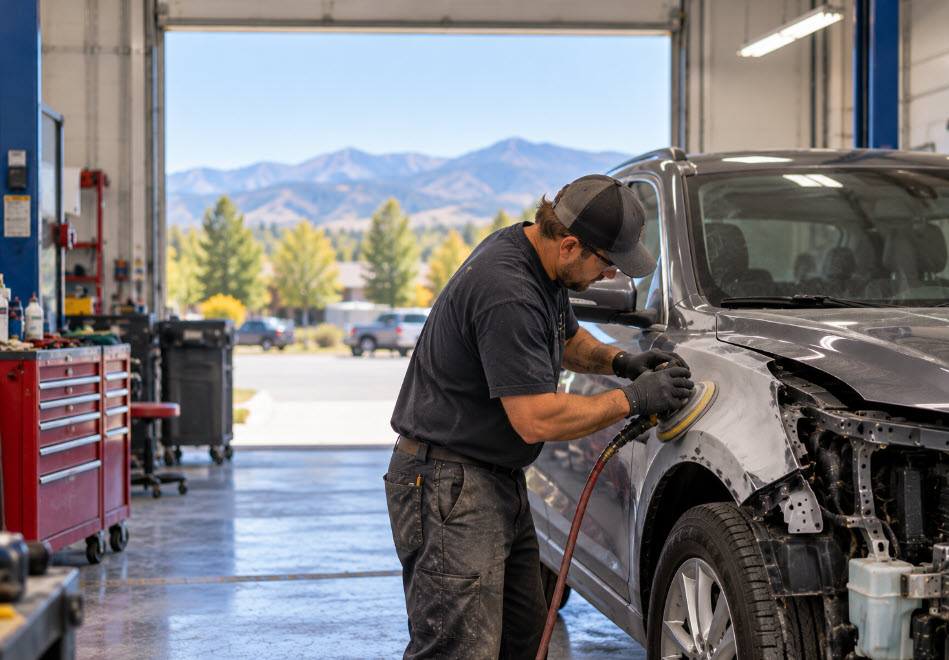
Auto body shops in Colorado face unique insurance risks because they work directly with customer vehicles, expensive repair equipment and potentially hazardous materials. From collision repairs and paint refinishing to frame straightening and dent removal, even a small mistake or unexpected accident can result in a costly claim. Whether you operate an independent body shop, a paintless dent repair business or a larger collision repair center, having the right commercial insurance can help protect your shop, employees and the vehicles entrusted to your care.
Colorado’s frequent hailstorms, rising vehicle repair costs and severe weather exposure can create additional challenges for auto body businesses, especially those storing customer vehicles outdoors. A properly structured insurance program can help address property damage, customer vehicle losses, employee injuries and business interruptions. Understanding which policies cover these risks is an important step when comparing insurance quotes.
How Much Does Auto Body Shop Insurance Cost in Colorado in 2026?
In 2026, a small to mid-sized auto body shop in Colorado may spend approximately $4,000 to $12,000 per year on a commercial insurance program that includes garage liability, garagekeepers and other essential coverage. Smaller shops with fewer employees, lower annual revenue and limited customer vehicle storage may fall toward the lower end. Larger collision repair centers with substantial payroll, expensive equipment, paint operations and higher vehicle values generally pay more.
More complex operations may spend $12,000 to $25,000 or more annually when commercial property, workers’ compensation, commercial auto, business income and additional liability coverage are included. Premiums depend on annual revenue, payroll, repair services, building size, the maximum value of customer vehicles on the premises, claims history and selected coverage limits. These figures are general budgeting estimates rather than verified statewide averages, and actual quotes may vary considerably.
What Insurance Does an Auto Body Shop Need in Colorado?
Most auto body shops need a combination of garage liability, garagekeepers, commercial property and workers’ compensation insurance. Garage liability coverage is designed for automotive businesses and can address certain bodily injury and property damage claims arising from garage operations. Unlike a standard general liability policy, garage liability coverage may also include specified vehicle-related exposures, depending on the policy.
Garagekeepers insurance helps protect customer-owned vehicles while they are in the shop’s care, custody or control. Commercial property insurance covers eligible buildings, paint booths, tools, machinery and other business property against covered losses. Business income insurance may also help replace lost income and certain continuing expenses if a covered property loss temporarily interrupts operations.
Auto body shops with employees generally need workers’ compensation insurance under Colorado law, subject to limited exceptions. Shops operating company-owned vehicles may also need commercial auto insurance, while businesses handling paints, solvents and other chemicals should evaluate whether pollution liability coverage is appropriate.
Does Auto Body Shop Insurance Cover Customer Vehicles?
Customer vehicle protection is one of the most important insurance considerations for auto body shops. Vehicles may be exposed to theft, fire, vandalism, collision or weather damage while awaiting repairs, being worked on or stored at the facility. Garagekeepers insurance is designed to address certain physical damage losses involving vehicles entrusted to the business, subject to policy terms and exclusions.
Garagekeepers coverage differs from garage liability insurance because it focuses on damage to customer vehicles rather than general business liability. Shop owners should review whether their policy provides legal liability, direct primary or direct excess coverage, since these options can affect how claims are handled. Coverage limits should reflect the maximum number and total value of customer vehicles on the premises, particularly when handling newer SUVs, luxury vehicles or high-value collision repairs.
Colorado’s hail exposure makes outdoor vehicle storage especially important. Shops that regularly keep customer vehicles outside should review weather-related coverage, deductibles and any restrictions involving outdoor storage or unattended vehicles.
Are Paint Booths, Frame Machines and Repair Equipment Covered?
Auto body shops often rely on expensive equipment that can be difficult to replace following a loss. Commercial property insurance can help protect covered assets such as paint booths, frame straightening machines, vehicle lifts, welding equipment, air compressors, diagnostic tools and office equipment. Shops that own their buildings may also need coverage for the structure itself.
Paint and refinishing operations deserve particular attention because they involve flammable materials, ventilation systems and specialized fire protection requirements. Insurance companies may evaluate spray booth construction, fire suppression systems, chemical storage, electrical systems and housekeeping procedures when determining eligibility and premiums. Equipment breakdown coverage may also be appropriate for certain mechanical or electrical failures that a standard property policy does not cover.
Does Insurance Cover Damage Caused During Auto Body Repairs?
Auto body shops can face liability claims when customer vehicles are accidentally damaged during repairs, movement or testing. For example, a technician might strike another vehicle while repositioning a car, damage an electronic component during repairs or cause additional damage while performing bodywork. Whether insurance responds depends on the circumstances, the coverage purchased and applicable policy exclusions.
Garagekeepers insurance may cover certain accidental physical damage to customer vehicles, but it does not automatically cover defective workmanship or the cost of correcting an improperly completed repair. Garage liability or other specialized coverage may respond to certain resulting third-party claims. Shop owners should review how their policies address completed operations, faulty work, test drives and vehicles moved between locations.
What Factors Affect Auto Body Shop Insurance Rates in Colorado?
Insurance companies evaluate several factors when pricing auto body shop coverage, including annual revenue, payroll, employee duties, years in business, claims history and the types of repairs performed. A small shop specializing in paintless dent repair generally presents a different risk profile than a full-service collision center performing structural repairs, welding, refinishing and mechanical work.
The number and value of customer vehicles, indoor versus outdoor storage, building construction, fire protection and security measures also influence premiums. Colorado’s hailstorms and weather-related property exposures can increase the importance of adequate coverage, particularly for shops storing multiple customer vehicles outdoors.
Maintaining documented safety procedures, employee training, secure vehicle storage and properly maintained fire protection systems may improve underwriting results. Shop owners should also review deductibles, update equipment values and compare coverage options from multiple carriers before renewal.
What Information Is Needed for an Auto Body Shop Insurance Quote?
Insurance companies typically request the shop’s business location, annual revenue, payroll, employee count, years of operation and claims history. They may also ask for a breakdown of services, including collision repair, paint refinishing, paintless dent repair, frame straightening, welding, mechanical repairs and vehicle storage.
For garagekeepers coverage, insurers often need the average and maximum number of customer vehicles on the premises along with their approximate total value. Building details, paint booth specifications, fire protection systems and existing insurance documents can also help determine eligibility and pricing. Providing accurate information upfront can make the quoting process more efficient.
Compare Auto Body Shop Insurance Quotes in Colorado
Whether you’re opening a new collision repair business, expanding an existing body shop or reviewing your current policy, it’s important to choose insurance that reflects your actual operations. A small paintless dent repair shop may need a different coverage structure than a full-service collision center with multiple technicians, spray booths and substantial customer vehicle storage.
Castle Rock Insurance and its commercial insurance partners help auto body shop owners throughout Colorado compare coverage options from multiple carriers. If you’re looking for garage liability, garagekeepers, commercial property, workers’ compensation or additional protection for your repair operations, contact Castle Rock Insurance to discuss your business and request a quote.