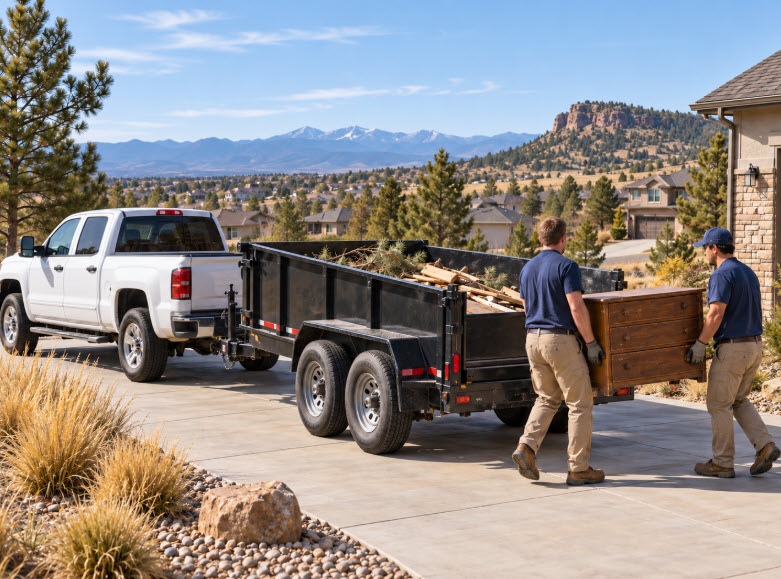
Hauling and junk removal businesses serve homeowners, contractors and property managers throughout Colorado. From property cleanouts in Castle Rock to gravel deliveries in Parker and construction debris removal in Denver, the work creates risks involving vehicles, employees and customer property.
Castle Rock Insurance and its partners help Colorado hauling companies explore coverage for trucks, trailers, crews and equipment. Whether you operate one pickup and a dump trailer or manage multiple vehicles, your insurance should reflect the materials you haul and the services you provide.
Insurance for Hauling and Junk Removal Businesses
Coverage can be reviewed for businesses providing:
- Junk removal, furniture pickup and appliance removal.
- Home, garage, rental property and storage unit cleanouts.
- Construction debris and renovation waste hauling.
- Brush, branches and yard waste removal.
- Gravel, dirt, sand, rock and mulch delivery.
- Local hauling with pickups, dump trailers and dump trucks.
Disclose additional services such as demolition, excavation, snow removal or vehicle transport. These activities can affect coverage and carrier eligibility. Companies primarily transporting freight can also review our Colorado commercial trucking insurance page.
How Much Does Hauling Insurance Cost in Colorado?
Pricing depends on your vehicles, drivers, services and coverage needs. A single-truck cleanout business has a different insurance profile from a company operating heavy dump trucks with employees and commercial contracts. General liability pricing alone does not represent the cost of insuring the entire operation.
Major cost factors include truck and trailer values, driving records, operating radius, materials hauled, revenue, payroll and claims history. Local deliveries around Douglas County may be evaluated differently from regular trips across state lines. Existing policies help compare equivalent limits, deductibles and protection when reviewing new quotes.
What Insurance Does a Hauling Business Need?
Commercial Auto and Truck Insurance
Commercial auto insurance can help address covered injuries and property damage caused by an insured business vehicle. Physical damage coverage can help protect the truck itself. Describe junk removal, for-hire hauling, material delivery and dump operations accurately when requesting coverage.
Trailer and Equipment Coverage
Review trailers individually based on their value, ownership and use, including whether they remain at customer properties. A truck’s physical damage coverage does not automatically protect every trailer. Tools and equipment insurance can help protect eligible movable business property, with rented equipment and roll-off containers requiring specific review.
General Liability Insurance
General liability insurance can help address covered third-party injuries and property damage arising from your work. Examples include a customer tripping over equipment or accidental damage while a crew works inside a property. Vehicle-related accidents, loading and unloading, and property in your care require closer review because exclusions and policy definitions affect coverage.
Workers’ Compensation Insurance
Hauling crews lift heavy items, handle debris and work around vehicles and machinery. Workers’ compensation insurance helps address covered workplace injuries and illnesses. Under Colorado workers’ compensation requirements, businesses generally need coverage when they have one or more employees, subject to limited exceptions. Calling a worker an independent contractor does not, by itself, establish an exemption.
Cargo and Additional Liability Protection
Transporting valuable customer property may require cargo or other property coverage based on the items hauled and maximum load value. Commercial umbrella or excess liability may provide higher limits above specified underlying policies. Neither should be assumed to cover excluded operations or every item being transported.
Important Coverage and Contract Requirements
Explain whether your crew only collects materials or also disconnects appliances, removes fixtures, performs demolition or spreads delivered gravel and soil. These activities introduce different exposures. Hazardous materials, including asbestos, chemicals and contaminated soil, require specialized review; ordinary policies may exclude pollution-related losses.
Commercial customers may require specific liability limits, additional insured endorsements and certificates of insurance. Provide those requirements with your quote request. A certificate documents insurance but does not add coverage or change policy terms.
Motor-carrier requirements depend on vehicle weight, cargo, operating territory and authority. Hauling businesses subject to federal operating-authority requirements should review the FMCSA insurance filing requirements. State requirements may also apply, so identify your routes and any required filings during the quoting process.
Compare Insurance Options for Your Hauling Business
Carrier availability depends on your services, vehicles, drivers and claims history. Castle Rock Insurance and its partners review available markets to help identify appropriate options. Commercial auto, liability, workers’ compensation and equipment coverage may be placed with different insurers.
To get started, have your vehicle and trailer details, driver information, operating radius, revenue, payroll and service descriptions available. Existing policies and customer insurance requirements can help make the review more complete. Request a Colorado hauling and junk removal insurance quote through Castle Rock Insurance today.