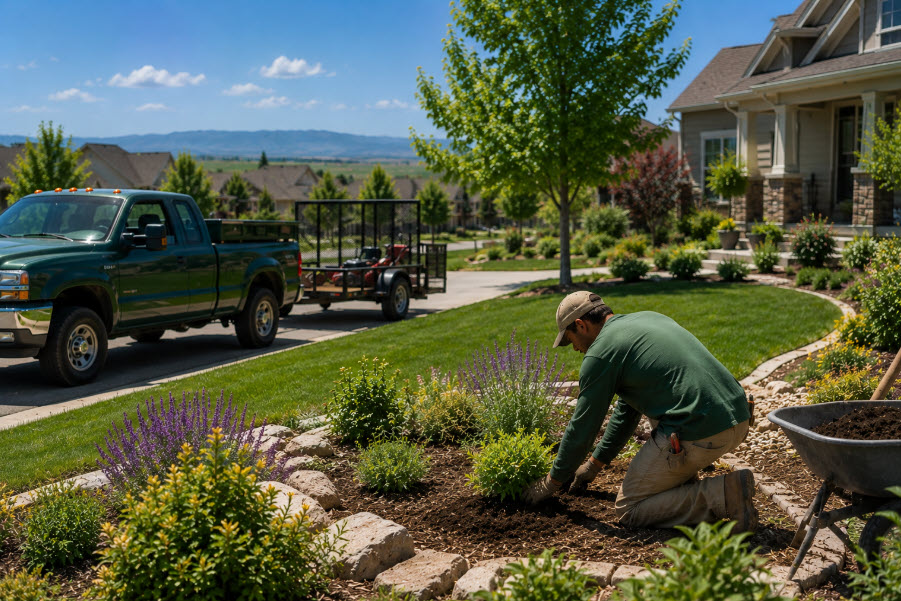
Landscaping contractors work throughout Colorado maintaining and improving homes, apartment communities, commercial properties and outdoor spaces. From independent lawn-care businesses serving local neighborhoods to established landscaping companies working throughout Denver, Colorado Springs, Fort Collins, Castle Rock and communities across the Front Range, these businesses may provide mowing, irrigation, planting, landscape construction, hardscaping, seasonal cleanup and other outdoor services.
Landscaping businesses also face risks that change considerably depending on the work being performed. Crews may operate mowers and power equipment, transport trailers between properties, work around customer buildings and vehicles and use fertilizers, herbicides or other lawn-care products. A damaged irrigation line, flying debris, employee injury, stolen equipment or vehicle accident can quickly become expensive. The right insurance can help protect the business while also making it easier to provide certificates of insurance, meet commercial contracts and add property managers or other clients as additional insureds when required.
How Much Does It Cost to Insure a Landscaping Business in Colorado?
In 2026, a smaller Colorado landscaping or lawn-care business may pay approximately $500 to $2,500 per year for general liability insurance, although premiums can fall outside this range. A self-employed landscaper focused primarily on mowing, trimming and basic residential maintenance may fall near the lower end. Businesses performing hardscaping, irrigation installation, tree work, excavation, snow removal or larger commercial projects may cost more to insure.
A broader landscaping insurance program may cost approximately $2,500 to $15,000 or more per year once workers compensation, commercial auto, tools and equipment, trailers, higher liability limits and other coverage are included. Larger Colorado landscaping companies with multiple crews, substantial payroll, several trucks or expensive machinery may pay considerably more. Pricing depends on annual revenue, payroll, employee count, claims history, vehicle use, equipment values, subcontractor costs and the specific landscaping services performed.
What Type of Insurance Coverage Does a Landscaping Contractor Need?
Most Colorado landscaping contractors should begin with general liability insurance. This coverage can help with third-party bodily injury and accidental property damage claims. For example, a mower could throw debris that damages a customer’s vehicle, landscaping work could damage a sprinkler system or underground property or a customer could be injured around equipment being used on the property.
Landscaping companies often invest heavily in mowers, trimmers, blowers, chainsaws, compact equipment and other gear that travels between jobs. Tools and equipment insurance can help protect eligible equipment against covered losses while it is being transported, stored or used away from the company’s primary location. Contractors using pickups, dump trucks, work vans or other vehicles should also consider commercial auto insurance, while Colorado landscaping businesses with employees will generally need workers compensation insurance.
Larger landscaping companies and businesses working under commercial contracts may also need commercial umbrella insurance for additional liability limits. Depending on the operation, other coverage may include commercial property, business income, pollution or chemical-related liability and protection for rented or leased equipment.
What Do Insurance Companies Look at When Insuring a Landscaping Business?
Insurance companies typically want a detailed breakdown of the services the landscaping company performs. Basic lawn mowing and maintenance may be treated differently from retaining-wall construction, concrete work, irrigation installation, excavation, tree removal or other landscape construction. Underwriters may ask what percentage of revenue comes from each service, the company’s maximum project size and whether work is primarily residential or commercial.
Carriers may also review payroll, employee experience, prior claims, vehicle records, equipment values and subcontractor use. A company maintaining residential lawns with a few mowers presents a very different risk than a contractor operating skid steers, dump trucks and trailers on larger commercial landscape projects. Accurately describing the operation is important so the insurance policy matches the work the company actually performs.
How Does Snow Removal Affect Landscaping Insurance?
Many Colorado landscaping companies add snow plowing or snow removal during the winter. This can create a significantly different liability exposure because contractors may be responsible for clearing parking lots, private roads, sidewalks and other areas where slip-and-fall accidents can occur. Insurance companies may therefore ask whether snow removal is performed, what percentage of annual revenue it represents and whether the company plows residential or commercial properties.
Landscapers that provide snow removal should make sure the service is disclosed when requesting insurance rather than assuming it is automatically included under a summer landscaping classification. Commercial snow-removal contracts may also contain additional insured, indemnification and insurance-limit requirements that should be reviewed before work begins.
Do Pesticides and Herbicides Affect Landscaping Insurance?
Landscapers that apply fertilizers, herbicides, pesticides or other chemicals may have additional liability exposures. A chemical application could potentially damage neighboring plants, contaminate property or lead to allegations involving bodily injury. Some landscaping insurance programs offer specific herbicide and pesticide protection, while other policies may contain limitations or exclusions.
Businesses that provide chemical lawn treatments should accurately disclose those services and review how the policy responds. The types of products used, application methods, employee training and percentage of revenue from chemical treatments can all affect underwriting.
Does Tree Work Change a Landscaping Company’s Insurance?
Tree trimming and removal can materially change a landscaping company’s risk. Working at height, using chainsaws, operating bucket trucks or removing large trees creates different exposures than routine lawn maintenance. Some insurance companies place restrictions on tree work or maximum working heights, while others may require the operation to be classified as an arborist or tree-service contractor.
A landscaper that occasionally trims small ornamental trees may therefore be treated differently from a company performing large-tree removal, climbing or crane-assisted work. Tree services should be clearly disclosed when requesting coverage so the carrier can determine whether they fall within its landscaping appetite.
How Do Subcontractors Affect Landscaping Contractor Insurance?
Landscaping businesses that subcontract irrigation, concrete, tree work, excavation or other services should keep organized insurance documentation. Carriers may ask how much work is subcontracted and whether subcontractors maintain their own general liability and workers compensation coverage.
Commercial clients may also require certificates of insurance, additional insured endorsements or specific liability limits before a landscaping contractor begins work. Written subcontractor agreements and current certificates of insurance can help with underwriting, policy audits and contract compliance.
Insurance Companies That May Cover Colorado Landscaping Contractors
Castle Rock Insurance is a Colorado insurance agency that works with its partners to help landscaping and lawn-care businesses explore coverage through standard and specialty commercial insurance markets. Depending on the company’s services, payroll, vehicles, equipment, snow-removal exposure, tree work and claims history, options may be available through carriers such as The Hartford, ERGO NEXT, Progressive Commercial and other insurance companies that consider landscaping businesses. Carrier appetite can vary substantially when a company performs hardscaping, chemical applications, snow removal or tree work, so Castle Rock Insurance and its partners can help review the operation and compare available coverage options.
Get Your Landscaping Business Insured Today!
Whether you operate a small lawn-care business or manage a growing landscaping company with crews, vehicles, equipment and commercial accounts, Castle Rock Insurance and its partners can help you explore insurance options designed around the work you perform. Contact us today to compare available coverage options and request a Colorado landscaping contractor insurance quote.