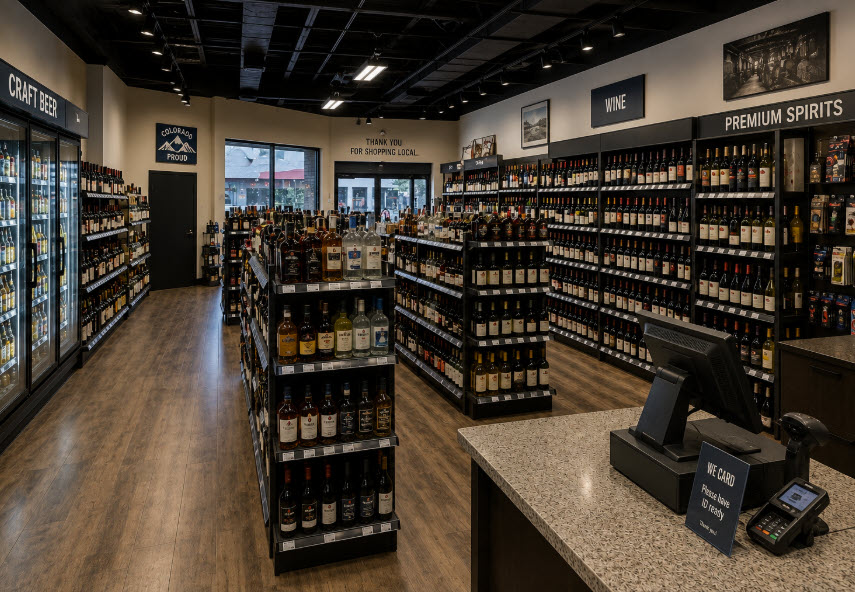
Liquor stores throughout Colorado sell beer, wine and spirits to customers in Denver, Aurora, Colorado Springs, Fort Collins, Castle Rock and communities across the Front Range. These businesses can carry substantial inventory values while managing customer traffic, alcohol-sale regulations, electronic payments, refrigeration equipment and valuable specialty products.
A burglary can result in a major inventory loss, a fire or water claim can interrupt operations and an alcohol-related incident can create additional liability. The right insurance should reflect the store’s inventory, annual sales, employees, property, operating hours and the way alcohol is sold.
How Much Does Liquor Store Insurance Cost in Colorado?
In 2026, a smaller Colorado liquor store may pay approximately $2,000 to $6,000 per year for a basic commercial insurance program, although premiums can fall outside this range. A more comprehensive program may cost approximately $4,000 to $12,000 or more per year when liquor liability, higher property limits, crime coverage, workers compensation and other protection are included.
Larger stores, higher inventory values, owned buildings, multiple locations, tastings and prior claims can push premiums higher. Annual sales, location, security protections, operating hours and selected coverage limits can also have a significant impact on cost.
What Insurance Does a Colorado Liquor Store Need?
Many stores can begin with a Business Owners Policy (BOP), which may combine general liability, commercial property and business income coverage. This can provide a foundation for customer injury claims, covered damage to inventory and store property and lost income following certain covered property losses.
Colorado liquor stores with employees will generally need workers compensation insurance. Depending on the operation, owners may also need liquor liability, crime, equipment breakdown, commercial auto or umbrella coverage.
Does a Colorado Liquor Store Need Liquor Liability Insurance?
Selling alcohol creates an exposure that ordinary retail businesses do not have. Liquor liability insurance can help protect a business against certain covered claims involving bodily injury or property damage allegedly resulting from alcohol the business sold or furnished.
Colorado law generally limits alcohol-vendor liability, but important exceptions apply when a licensee willfully and knowingly sells or serves alcohol to someone under 21 or visibly intoxicated. Liquor store owners should review liquor liability separately from ordinary general liability and select limits appropriate for their alcohol sales and overall exposure.
What Does Colorado Law Require of Liquor Stores?
Colorado retail liquor stores operate under both state and local licensing requirements. State law prohibits alcohol sales to anyone under 21 or to a visibly intoxicated person. The Colorado Liquor Enforcement Division provides current licensing, enforcement and regulatory information for alcohol retailers.
Colorado law generally permits sealed-container alcohol sales from 8 a.m. until midnight, and retail liquor stores cannot allow customers to complete alcohol purchases through self-checkout. Consistent age verification, employee training and refusal-of-sale procedures are important for both compliance and risk management.
How Does Colorado’s Dram Shop Law Affect Liquor Stores?
Colorado’s dram-shop law provides substantial protection to alcohol vendors but allows claims in certain circumstances when a licensee willfully and knowingly sells alcohol to someone under 21 or visibly intoxicated. Liquor liability coverage should therefore be considered alongside strong age-verification and refusal-of-sale procedures.
How Much Property and Inventory Coverage Does a Liquor Store Need?
Commercial property insurance can help protect eligible beer, wine, spirits, shelving, refrigeration equipment, point-of-sale systems and tenant improvements against covered losses. Property limits should reflect realistic replacement costs and peak inventory rather than only the stock normally carried during slower periods.
Holiday inventory, allocated spirits, specialty wine and other high-value products can significantly increase the amount at risk. Owners should review how inventory is valued after a claim and make sure policy limits remain adequate during seasonal peaks.
What About Theft, Burglary and Employee Crime?
Liquor stores can be attractive burglary targets because they contain portable, valuable inventory and may handle significant cash. Owners should review property coverage alongside alarm systems, surveillance cameras, locks and safes as well as available crime or money-and-securities coverage.
Employee-dishonesty or crime coverage may also help address certain covered losses involving inventory, cash or other business property stolen by employees.
What Happens if the Liquor Store Has to Close?
A fire, major water loss or other covered property claim can stop sales immediately while rent, payroll and other expenses continue. Business income coverage may help replace lost income and certain continuing expenses while the store is closed because of a covered loss.
Do Refrigeration and Equipment Breakdowns Need Coverage?
Many liquor stores rely on walk-in coolers, reach-in refrigeration and related equipment. Equipment breakdown coverage can help address certain mechanical or electrical failures that ordinary property insurance may not cover.
Stores with significant refrigerated inventory should also ask how the policy handles spoilage or temperature-change losses after a covered equipment breakdown or utility interruption. These protections vary by policy and should be confirmed rather than assumed.
Do Tastings Change Liquor Store Insurance?
They can. Colorado allows authorized tastings under specific rules, but on-premises sampling creates a different exposure from ordinary sealed-container retail sales. Stores offering tastings should disclose the activity and make sure their liquor liability coverage appropriately reflects their operations.
What Do Insurance Companies Look at When Insuring a Liquor Store?
Underwriters commonly review annual sales, inventory values, location, operating hours, building construction, prior claims and whether the premises are owned or leased. Security systems, employee training, age-verification procedures, fire protection, tastings, delivery and high-value specialty inventory can also affect pricing and eligibility.
Insurance Companies That May Consider Liquor Stores
Liquor stores are considered by a mix of standard and specialty commercial insurance markets. Depending on underwriting requirements and the individual business, companies active in commercial small-business and liquor-related insurance include names such as The Hartford, ERGO NEXT and biBerk, along with other specialty markets. Castle Rock Insurance works with its commercial insurance partners to review the business and explore appropriate coverage based on the individual store’s operations and insurance needs.
Get a Colorado Liquor Store Insurance Quote
Whether you operate a neighborhood package store, a larger beer, wine and spirits retailer or multiple Colorado locations, Castle Rock Insurance and its partners can help you explore coverage designed around your inventory, alcohol liability, employees and property. Contact us today to request a Colorado liquor store insurance quote.