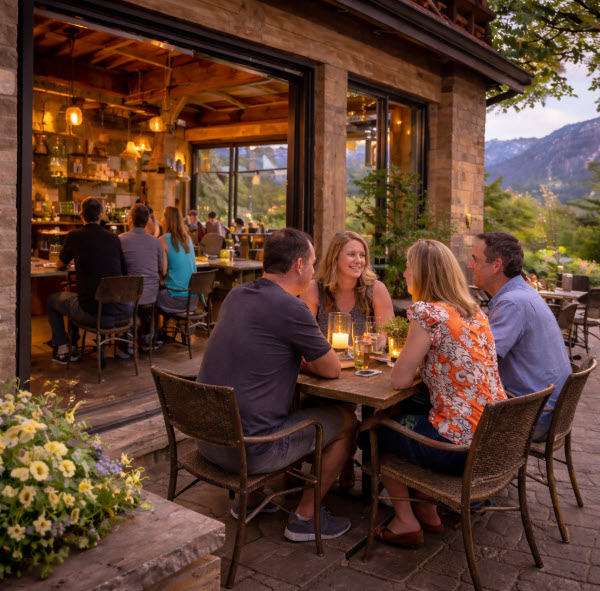
Owning a restaurant in Colorado is exciting, but it also comes with real risk. Between customer safety, employee injuries, property exposure, and alcohol service, restaurants face higher liability than many other local businesses. The right insurance coverage helps protect what you have built so you can stay focused on running the restaurant.
Colorado adds its own challenges. Snow and ice increase slip-and-fall claims. Wildfire season can raise property risk and disrupt operations. Tourism can spike foot traffic overnight. Because of this, restaurant insurance should be structured around how you operate, where you are located, and what risks you face throughout the year.
Why Colorado Restaurant Insurance is Different
Restaurant insurance in Colorado requires a more tailored approach than in many other states. Geography, climate, tourism, and local regulations all play a role in how coverage should be structured. A small café in a town like Buena Vista or Salida with limited seating and no alcohol exposure has very different insurance needs than a high-volume restaurant in downtown Denver with a full bar, delivery drivers, and extended hours.
Mountain and rural restaurants in areas such as Aspen, Vail, Breckenridge, Steamboat Springs, and Winter Park often face higher exposure to severe weather, wildfire risk, and access challenges. Snow and ice can increase slip-and-fall claims, while limited emergency access can raise property and liability concerns. Seasonal tourism in these areas can also create large swings in customer volume, making business interruption coverage especially important.
Urban restaurants in cities like Denver, Boulder, Fort Collins, Colorado Springs, and Aurora typically experience higher third-party liability simply due to foot traffic and population density. Slip-and-fall claims, delivery-related accidents, and alcohol-related incidents tend to be more common in busy downtown districts and entertainment areas. Restaurants that rely on delivery services or third-party platforms may also face additional auto and contractual liability exposure.
Local regulations and landlord requirements can further shape restaurant insurance needs across Colorado. Lease agreements in places like Lakewood, Littleton, Centennial, and Greenwood Village often require specific coverage limits, additional insured endorsements, or liquor liability insurance as a condition of operating. Licensing authorities may also require proof of coverage before allowing a restaurant to open or expand alcohol service.
Because of these regional and operational differences, there is no one-size-fits-all restaurant insurance policy in Colorado. Coverage should be built around your specific concept, location, staffing levels, revenue, hours of operation, and whether alcohol, delivery, or catering services are part of your business model.
Core Coverages That Make Up Restaurant Insurance
Restaurant insurance is typically built as a layered program, with each coverage addressing a specific type of risk common to food service operations. The goal is not just to meet minimum requirements, but to protect the restaurant from the types of claims that most often cause financial strain or force businesses to close.
Most restaurant insurance programs start with general liability coverage. This coverage helps protect your business if a customer is injured on your premises, such as a slip-and-fall, or if your operations cause damage to someone else’s property. General liability is often required by landlords and is a foundational coverage for nearly every restaurant. Learn more at Colorado General Liability Insurance.
Commercial property insurance protects the physical assets that keep your restaurant running. This can include the building itself, tenant improvements, kitchen equipment, furniture, signage, and inventory. Coverage typically applies to losses caused by fire, severe weather, theft, vandalism, and other covered events. Given the cost of restaurant buildouts and equipment, property coverage is especially important in Colorado, where wildfire and weather-related risks can be significant. Learn more at Colorado Commercial Property Insurance.
Workers’ compensation insurance is required for most Colorado restaurants and plays a critical role in protecting both employees and the business. It helps cover medical expenses, rehabilitation costs, and lost wages if an employee is injured on the job. In a restaurant setting, this can include burns, cuts, slips, or repetitive-motion injuries. Carrying proper workers’ compensation coverage also helps protect the business from employee injury lawsuits. Learn more at Colorado Workers’ Compensation Insurance.
If your restaurant serves alcohol, liquor liability insurance is often essential. This coverage helps protect against claims related to alcohol-related incidents, including injuries or property damage caused by intoxicated patrons. Liquor liability is frequently required by landlords, lenders, or licensing authorities and can be a deciding factor in whether a restaurant can secure coverage at all. Learn more at Colorado Liquor Liability Insurance.
Many restaurant owners choose to bundle key coverages into a single policy for simplicity and cost efficiency. A Colorado Business Owner’s Policy (BOP) can combine general liability, commercial property, and business interruption coverage into one streamlined solution, making it easier to manage and often more affordable than purchasing each policy separately.
Depending on how your restaurant operates, additional coverage may be needed. Restaurants that offer delivery or catering may require commercial auto insurance. Businesses that rely on online ordering, reservations, or digital payment systems often consider cyber liability coverage. Equipment breakdown insurance can help address sudden failures of critical kitchen equipment, while employment practices liability insurance can help protect against claims involving wrongful termination, discrimination, or harassment.
How Much Does Restaurant Insurance Cost in Colorado?
Restaurant insurance costs in Colorado vary based on your concept, location, annual revenue, payroll size, claims history, and whether alcohol is served. Weather exposure, wildfire risk, and seasonal tourism can also influence pricing. For people researching real numbers, it helps to think of restaurant insurance as a combination of several policies stacked together rather than a single flat price.
For smaller or limited-service restaurants, such as cafés, counter-service concepts, or neighborhood spots with minimal seating and no alcohol, 2026 insurance costs commonly fall in the range of $3,000 to $7,000 per year. This typically includes general liability insurance, commercial property coverage for basic equipment and buildout, and workers’ compensation based on a modest payroll.
Full-service restaurants that serve alcohol generally see higher costs due to increased liability exposure. When liquor liability insurance is added to general liability, property coverage, and workers’ compensation, many Colorado restaurants fall into a range of approximately $6,000 to $15,000 annually for 2026. Costs within this range depend heavily on alcohol sales volume, hours of operation, seating capacity, and overall revenue.
Higher-volume restaurants, including busy Denver locations, restaurants in tourist markets, bar-forward concepts, or operations with extended hours, delivery services, or live entertainment, often land in a higher cost bracket. For these businesses, total annual insurance costs commonly range from $15,000 to $30,000 or more. These premiums reflect higher payrolls, greater foot traffic, higher replacement costs for equipment and buildouts, and increased likelihood of liquor-related or injury claims.
Looking at individual policy components can also help explain where these totals come from. For many restaurants, general liability insurance alone often runs between $500 and $2,500 per year. Commercial property insurance frequently ranges from $500 to $3,000+, depending on equipment values and building exposure. Workers’ compensation is driven by payroll and job classifications and can range from a few hundred dollars to several thousand dollars annually. Liquor liability insurance may start under $1,000 per year for lower alcohol exposure but can climb significantly for bar-heavy or late-night concepts.
Additional coverages such as commercial auto insurance for delivery, cyber liability for online ordering systems, equipment breakdown coverage, or employment practices liability insurance will increase the total premium but help protect against costly gaps.
The most accurate way to determine your restaurant’s insurance cost is with a tailored quote built around your specific operation. Coverage limits, deductibles, building details, and business model all play a role, and small changes in risk profile can have a meaningful impact on price.
Working With the Right Insurance Professionals
Choosing the right insurance partner is just as important as choosing the right coverage. Independent insurance brokers and exclusive local agents who have access to multiple carriers can help restaurant owners compare options and structure policies that truly fit their business. This approach allows coverage to be adjusted based on your location, operations, staffing, and risk profile rather than forcing your restaurant into a one-size-fits-all policy.
The goal is straightforward. Reduce coverage gaps, avoid paying for insurance you do not need, and make sure your policy reflects how your restaurant actually operates on a day-to-day basis. As your business grows or changes, the right insurance professional can help update your coverage so it continues to align with your needs.
With a properly structured insurance plan in place, Colorado restaurant owners can operate with greater confidence and focus on serving customers, supporting their staff, and growing their business.
Contact Castle Rock Insurance today to get started on a free quote and learn how we can help build an insurance strategy designed specifically for your Colorado restaurant.
.