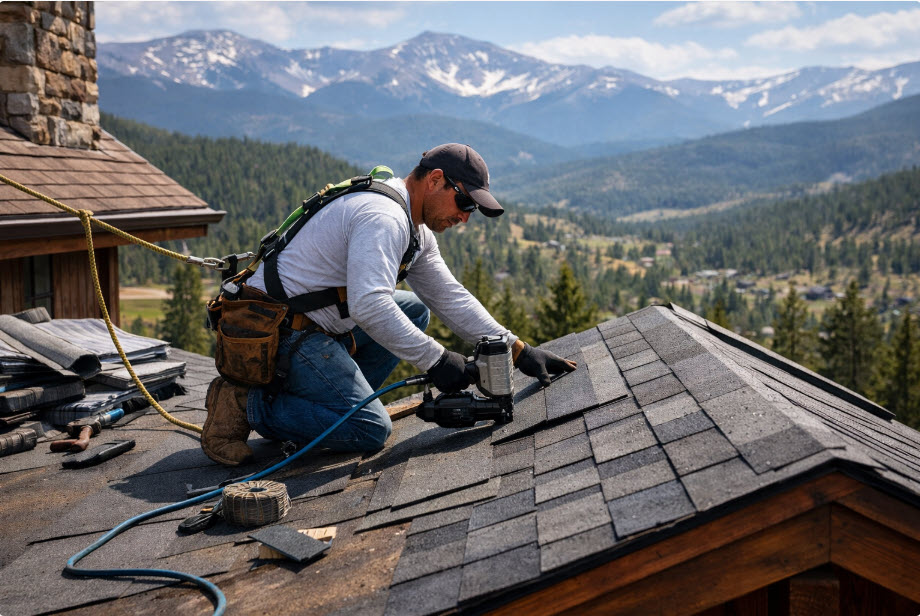
Ever had a door-to-door salesperson knock and try to sell you a new roof? Most people grip the doorknob, nod politely and hope the conversation ends fast. No offense to roofers. But when it comes to homeowners insurance in Colorado, that knock can be worth a little more attention. Roof details often explain why a quote changes or why a renewal becomes more complicated.
For insurers, few parts of a home matter more than the roof. It takes the full impact of hail, wind, snow and wildfire exposure year after year, and it is one of the most expensive components to repair or replace after a loss. That is why roof age and material are among the first items reviewed. In Colorado, the roof can affect pricing, deductibles, coverage terms and even whether a home qualifies for standard insurance.
Roof Age and Material Now Drive Coverage Eligibility in Colorado
In today’s market, carriers use roof details as a quick screening tool. A newer roof signals lower loss potential, so it tends to attract more standard carrier options along with lower deductibles and fewer restrictions. Older roofs often trigger extra review and can reduce options even before a quote is fully considered.
Material matters just as much. Architectural shingles and metal roofing are generally viewed more favorably because they hold up better in Colorado conditions. Less resilient materials or worn installations can push a home into stricter underwriting or specialty markets. Roof age and composition are no longer minor details. They often determine which carriers will even consider the risk.
How Much Does the Roof Affect Your Homeowners Insurance Price?
Once a home meets basic guidelines, the roof becomes one of the biggest drivers of pricing and terms. Underwriters treat it as a risk multiplier. A newer roof reduces the chance that a weather event turns into interior water damage or a full replacement claim. As roofs age, shingles get brittle, seal strips weaken and edges lift more easily, which increases the odds of a large claim.
As a general underwriting pattern, roof age tends to fall into the following ranges:
- 0 to 10 years old: Typically receives the widest range of standard carrier options and the most favorable deductibles. These roofs are viewed as having predictable remaining life and lower near-term loss potential. Carriers are more comfortable offering replacement cost settlement and broader coverage terms.
- 10 to 15 years old: Still eligible in many cases, but documentation and visible condition begin to carry more weight. Underwriters may request photos or prior inspection details, especially in hail exposed areas. Deductibles can begin to increase depending on material and prior claims.
- 15 to 20 years old: Often results in higher deductibles, fewer carrier choices or tighter coverage terms. Some carriers may shift to actual cash value roof settlement or apply wind and hail percentage deductibles. Evidence of maintenance, clean inspections and impact resistant materials can help preserve better placement.
- Over 20 years old: Commonly declined in the admitted market, even with a clean claims history. At this stage, underwriters focus heavily on remaining useful life rather than age alone. Homes in this range are frequently referred to excess and surplus carriers, where premiums are typically higher and coverage terms can include more restrictive roof settlement provisions.
Clean inspections, proof of maintenance and clear documentation can help preserve eligibility, while visible wear, patchwork repairs or missing shingles can quickly shift a home from standard markets into excess and surplus placement.
Clean inspections and proof of maintenance can help preserve eligibility, while visible wear or prior patchwork can quickly shift a home from standard markets into excess and surplus placement.
How Much Can You Save on Homeowners Insurance if You Get a New Roof?
In Colorado, most homeowners see total premium savings of about 5% to 15% after replacing an aging roof because the home often moves into a better roof tier and opens up more standard carrier options. If the prior roof was 15 years old or older and you upgrade to a Class A architectural shingle or metal roof, savings can sometimes reach 15% to 25%, depending on carrier, location and prior claim history. In hail prone areas, documented Class 4 impact resistant shingles can improve the credit further. The biggest benefit is often fewer restrictions and better deductibles, not just a lower price.
How much you actually save typically depends on several factors:
- Previous roof age: The older the prior roof, the greater the potential pricing improvement once the home moves back into a preferred underwriting tier.
- Roof material upgrade: Moving from basic three-tab shingles to architectural or metal roofing can improve carrier interest and reduce wind and hail surcharges.
- Impact resistance rating: Verified Class 3 or Class 4 shingles may qualify for additional wind and hail credits in many Colorado territories.
- Market access: A new roof can shift a home from limited or specialty placement back into standard admitted carriers, which often produces the most meaningful long term savings.
For example, on a $3,500 annual premium, a 10% improvement represents $350 per year. Over five years that difference alone can offset a portion of the roof investment. More importantly, improved deductibles and replacement cost terms can significantly reduce out of pocket exposure if a major hail or wind event occurs.
Why Roof Age and Material Matter Most in Colorado Fire Zones
In wildfire exposed areas, the roof is often a pass or fail underwriting item. Many losses start when wind driven embers land on the structure and age-related wear creates more places for embers to catch. Debris in valleys and around roof penetrations, plus snow load and freeze thaw cycles in the mountains, can accelerate deterioration, which insurers account for when evaluating risk.
Class A fire rated roofing is often required. Newer architectural shingles are widely accepted, and metal roofs are viewed even more favorably by many carriers because they are noncombustible. Standing seam metal can materially improve insurability in some cases. Carriers also pay close attention to vents, chimneys, skylights, gutters and other roof transitions since those are common ignition points if not properly protected.
Getting a Home Insurance Quote? Lead With Your Roof Details
When you request a quote, share the roof replacement year, the material and any documentation you have such as invoices, permits, photos and recent inspections. Clear roof details upfront can help avoid surprises like higher deductibles, coverage limitations or a declined quote.
Castle Rock Insurance and its partners help Colorado homeowners navigate these underwriting details before a quote is submitted. Share your roof information early so your policy can be rated accurately from the start.