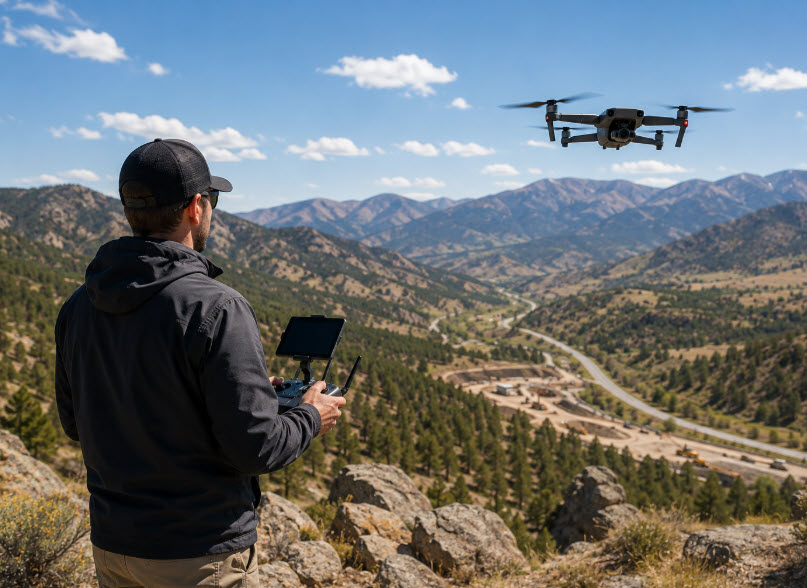
Commercial drone and UAV operators throughout Colorado use aircraft for real estate photography, construction, inspections, mapping, agriculture, surveying and other specialized services. These businesses face aviation risks that ordinary business insurance may not adequately address, including injury or property damage caused by a drone and loss or damage to expensive aircraft and equipment.
Commercial drone insurance can combine aviation liability with coverage for the drone itself, cameras, sensors and other equipment. The appropriate policy depends on the aircraft, pilots, services performed, equipment values and where the business operates.
How Much Does Commercial Drone Insurance Cost in Colorado?
In 2026, a smaller Colorado commercial drone operator may pay approximately $500 to $2,000 per year for a basic drone insurance program, although premiums can fall outside this range. Current commercial drone programs show that liability-only coverage can begin below this range, while adding expensive drones, payload equipment or higher limits can increase the cost substantially.
Pricing is generally influenced by liability limits, aircraft and equipment values, number of pilots, flight frequency, operating locations, claims history and the type of work performed.
What Insurance Does a Commercial Drone Operator Need?
Aviation liability is one of the most important coverages for a commercial drone business. It can help address covered bodily injury or property damage claims caused by drone operations. Operators should not assume an ordinary general liability policy automatically covers aircraft or UAV liability because aviation exposures may be excluded or restricted.
Businesses may also need hull coverage for physical damage to owned drones, coverage for mounted cameras and sensors and protection for certain rented or borrowed aircraft.
How Are the Drone and Its Payload Insured?
Hull coverage protects the insured drone itself against certain physical losses, while cameras, thermal imaging systems, LiDAR units, multispectral sensors and other payload equipment may need to be specifically included or scheduled. This is particularly important when the equipment attached to the aircraft is worth as much as or more than the drone.
Inland marine insurance may also be useful for portable cameras, computers and other business equipment that travels between job sites but is not necessarily insured as part of the aircraft. Operators should understand how equipment is covered in flight, in transit and while stored away from their primary location.
Do Drone Inspection and Mapping Companies Need Professional Liability?
Drone operators that provide technical services can have exposures beyond an aircraft accident. Businesses producing inspection reports, measurements, maps, surveys, construction documentation or other professional findings may face claims alleging inaccurate information or errors in their work.
Errors and omissions insurance can help address certain claims involving professional services, while aviation liability primarily addresses bodily injury and property damage arising from drone operations.
What Rules Apply to Commercial Drone Operators in Colorado?
Most small commercial drone operations are governed by the Federal Aviation Administration’s commercial drone rules, including Part 107 requirements covering pilot certification, operating limitations, visual line of sight and certain operations over people. Flights in controlled airspace may also require FAA authorization.
Part 107 operators must register each drone used commercially, and aircraft required to be registered generally must comply with FAA Remote ID requirements. Commercial operators should also verify any restrictions that apply to the property or location where they intend to launch, land or conduct the operation.
Does the FAA Require Commercial Drone Insurance?
The FAA does not impose a general liability-insurance requirement on ordinary Part 107 commercial drone operations. Insurance may still be required by a customer, construction company, property owner, government entity or other contract before a pilot is permitted to perform work.
What Do Insurance Companies Look at?
Underwriters may review the number and value of drones, payload values, pilot experience, certifications, annual flight activity, claims history and services performed. Operating around buildings, construction sites, utilities, crowds, airports or other higher-risk environments can also affect pricing and eligibility.
Insurance Companies That May Consider Commercial Drone Operations
Commercial drone businesses are considered by a mix of aviation and specialty insurance markets. Available options depend on the aircraft, pilots, services, equipment values, operating locations and requested limits. Castle Rock Insurance works with its commercial insurance partners to review drone operations and explore coverage based on each business’s exposures and underwriting eligibility.
Get a Colorado Commercial Drone & UAV Insurance Quote
Whether you operate drones for aerial photography, real estate, construction, inspections, mapping, agriculture or other commercial work, Castle Rock Insurance and its commercial insurance partners can help you explore coverage for your aviation liability, aircraft and equipment. Contact us today to request a Colorado commercial drone and UAV insurance quote.