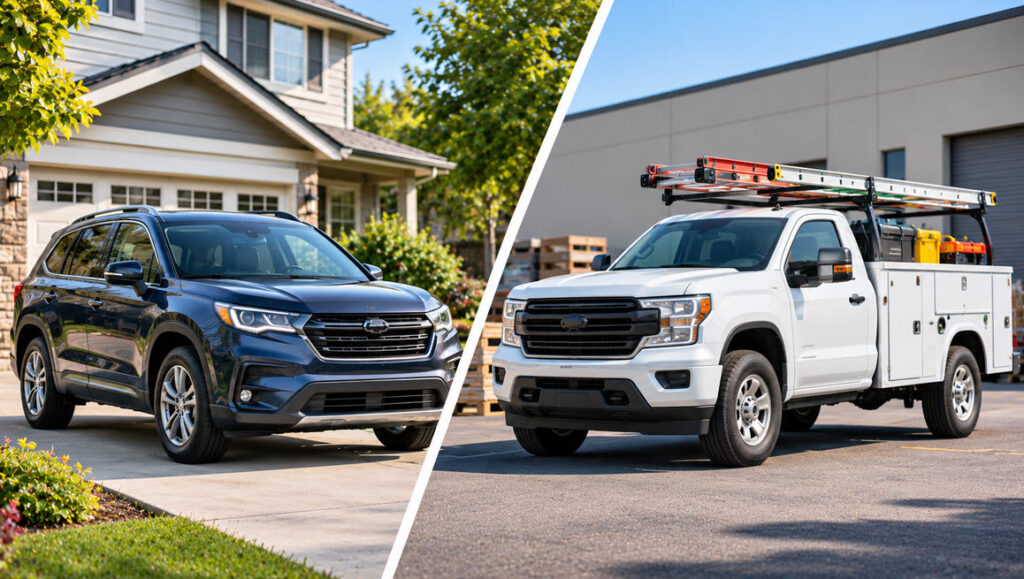
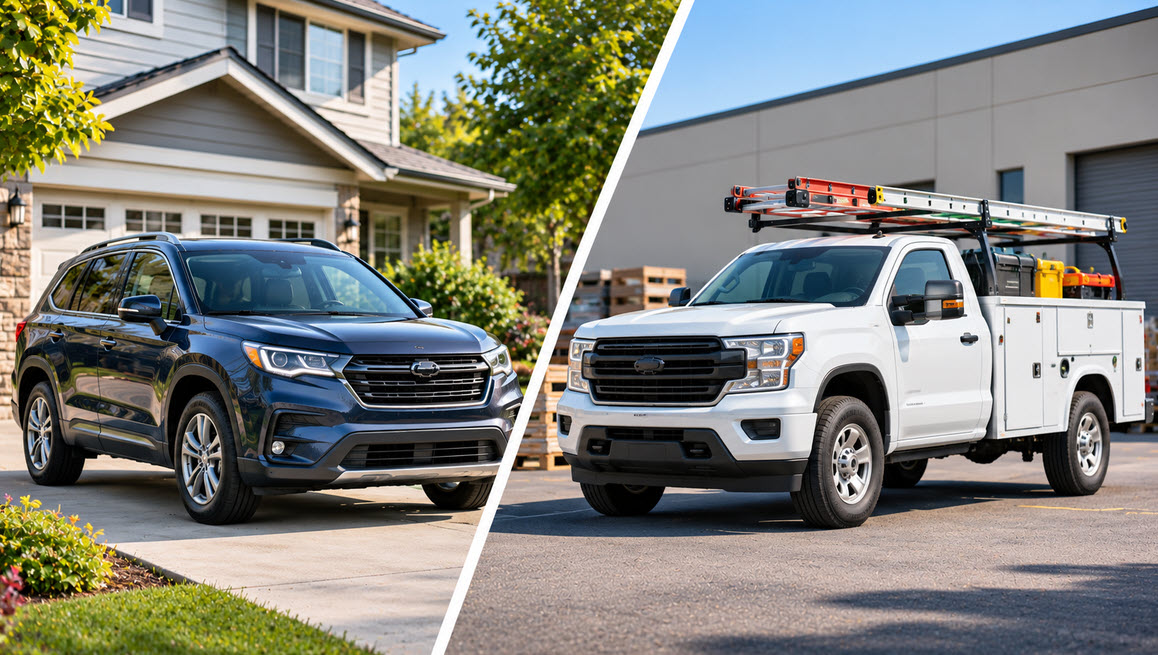
Not sure whether you need personal or commercial auto insurance in Colorado? The answer depends on how you use your vehicle, who owns it and the type of work you do. Personal auto insurance generally covers everyday driving, while commercial auto insurance is designed for business-related risks. However, not every vehicle used for work requires a commercial policy. Understanding the differences can help you choose the right coverage and avoid unexpected gaps.
What’s the Difference Between Personal and Commercial Auto Insurance?
Both personal and commercial auto insurance can provide liability, collision, comprehensive and uninsured/underinsured motorist coverage. The main differences involve how vehicles are used, who is insured and the types of risks the policy is designed to cover.
Personal auto insurance generally protects individuals and households, while commercial auto insurance is structured for business operations. Commercial policies may accommodate business-owned vehicles, multiple drivers, different vehicle types and higher liability limits. However, commercial coverage isn’t automatically broader in every situation.
| Coverage Consideration | Personal Auto Insurance | Commercial Auto Insurance |
|---|---|---|
| Primary purpose | Everyday personal driving | Business vehicle operations |
| Vehicle ownership | Usually individually owned | Often business-owned or leased |
| Business use | Certain activities may qualify | Designed for eligible business activities |
| Drivers | Typically household and permitted drivers | Drivers covered under policy terms |
| Liability limits | Personal policy options | Often higher limits available |
| Multiple vehicles | Personal vehicle policies | Can accommodate business fleets |
Can I Use My Personal Vehicle for Business in Colorado?
Yes. Some insurers allow certain business activities under a personal auto policy. Commuting to a regular workplace, occasionally visiting clients or attending business meetings may be covered, depending on the insurer and policy.
However, regularly making deliveries, transporting passengers for payment or using a vehicle for certain commercial operations may require additional coverage. Even occasional business use should be disclosed to your insurer. You can learn more about everyday vehicle coverage through our Colorado auto insurance page.
When Do I Need Commercial Auto Insurance?
You may need commercial auto insurance in Colorado if your vehicle is owned by a business, regularly transports tools or merchandise, makes deliveries or is used for other commercial operations.
For example, an electrician driving a company-owned van between job sites has different insurance needs than an accountant occasionally visiting clients in a personal vehicle. Vehicle ownership, business activities, driver eligibility and the type of vehicle all influence the appropriate policy.
Is Commercial Auto Insurance More Expensive Than Personal Auto Insurance?
Commercial auto insurance often costs more because business vehicles may involve higher liability exposure, multiple drivers, specialized equipment or higher coverage limits. However, premiums vary significantly depending on the vehicle and business operations.
Insurers typically evaluate driving history, vehicle type, location, annual mileage, business activities and coverage selections. For additional pricing information, see our guide on how much auto insurance costs in Colorado. Keep in mind that personal auto insurance averages shouldn’t be treated as commercial auto insurance estimates.
Can I Insure My Work Truck Under a Personal Auto Policy?
Sometimes. A pickup truck used mainly for personal transportation and occasional business activities may qualify for personal auto insurance. Simply owning a pickup truck doesn’t automatically mean you need commercial coverage.
However, trucks regularly used for hauling business materials, towing commercial trailers or transporting equipment may require a commercial policy. Vehicle weight, ownership and business activities also influence eligibility. A contractor should confirm coverage for the truck itself and separately consider whether tools and equipment need additional protection.
Do Self-Employed People Need Commercial Auto Insurance?
Not necessarily. Being self-employed doesn’t automatically require commercial auto insurance. A freelance consultant who occasionally visits clients may qualify for personal coverage, depending on the insurer.
On the other hand, a landscaper transporting equipment, a cleaning company traveling between customer locations or a contractor operating a dedicated work vehicle may need commercial coverage. The important distinction is how the vehicle is used, not simply whether the driver owns a business.
Does Personal Auto Insurance Cover Deliveries or Rideshare Driving?
Many personal auto policies exclude certain activities involving deliveries or transporting passengers for payment. These exclusions can affect food delivery, courier services and rideshare driving.
Some insurers offer endorsements for specific activities, while others require separate commercial coverage. Rideshare platforms may also provide insurance during certain stages of a trip, but coverage can change depending on whether the driver is waiting for a request, traveling to a passenger or completing a ride. Drivers should verify their coverage before accepting paid assignments.
What If My Employees Use Their Own Cars for Business?
If employees drive personal vehicles for company errands, deliveries or client visits, the business may face liability exposure following an accident. An employee’s personal auto insurance may provide some protection, but it doesn’t necessarily eliminate the employer’s liability.
Hired and non-owned auto liability insurance can help protect businesses against certain claims involving rented vehicles or employee-owned cars used for work. This coverage generally protects the business’s liability rather than automatically paying for damage to an employee’s vehicle. It’s one of several protections worth reviewing as part of your Colorado business insurance.
Does Commercial Auto Insurance Cover Personal Driving?
Often, yes. Many commercial auto policies can accommodate personal use of an insured business vehicle, depending on the policy terms and authorized drivers.
However, coverage isn’t automatic for every situation. For example, a company-owned truck driven home by an employee may be covered differently than the same truck being used by an employee’s family member. Business owners should confirm permitted personal use and driver eligibility with their insurer.
Does Commercial Auto Insurance Cover Tools and Equipment Inside My Vehicle?
Not necessarily. Commercial auto insurance primarily addresses covered vehicle-related risks, such as liability arising from an accident and physical damage to an insured vehicle when applicable coverage is purchased.
Tools, merchandise and equipment carried inside the vehicle may require separate insurance. Contractors and other businesses that regularly transport valuable equipment should consider inland marine or other appropriate business property coverage rather than assuming everything inside the vehicle is protected.
What Are Colorado’s Minimum Auto Insurance Requirements?
Colorado generally requires drivers to carry minimum liability limits of $25,000 per person and $50,000 per accident for bodily injury, along with $15,000 for property damage. These minimums apply to standard personal auto liability requirements, but they may not provide enough financial protection after a serious accident.
Businesses may need higher liability limits depending on their operations, contracts and vehicle types. Certain commercial vehicles and transportation activities are also subject to additional state or federal insurance requirements. Meeting the legal minimum doesn’t necessarily mean a policy provides adequate protection.
What Happens If I Have the Wrong Type of Auto Insurance?
Using a vehicle for activities excluded by your insurance policy can create serious problems after an accident. For example, a personal auto policy may not cover an accident that occurs during an excluded commercial delivery activity.
The outcome depends on the policy language, circumstances and applicable law. Accurately disclosing vehicle ownership, business activities and drivers helps insurers determine whether personal coverage is sufficient or a commercial policy is necessary.
How Can I Get a Personal or Commercial Auto Insurance Quote in Colorado?
Castle Rock Insurance and its partners help Colorado drivers, independent contractors and business owners compare personal and commercial auto insurance options. Whether you drive your own car, operate a work truck or manage several company vehicles, we can help you understand your options and find coverage that fits your needs.
Not sure which policy is right for you? Castle Rock Insurance and its partners to request a quote. We can review how your vehicle is used and help determine whether personal or commercial auto insurance makes the most sense.