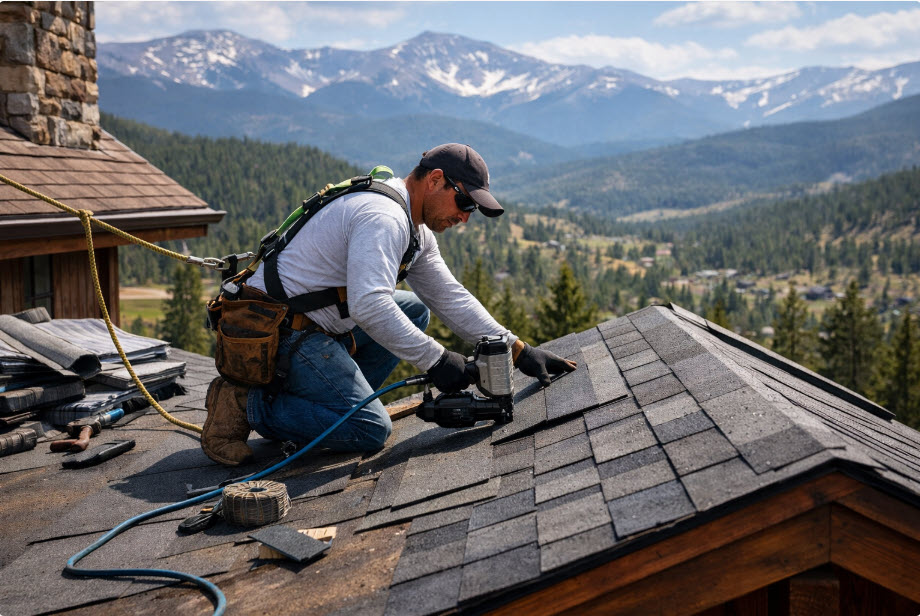
If you own a home in Colorado, your roof can have a much bigger impact on homeowners insurance than you might expect. Hail, wind, snow, wildfire exposure and Colorado’s intense sun all put roofs through a lot, so insurance companies tend to look closely at them when deciding whether to offer coverage and how a policy should be structured.
Roof age is important, but it is only part of the picture. Underwriters may also consider roofing material, condition, impact resistance, installation date, prior damage and the expected cost of repairing or replacing the roof. Those details can influence carrier eligibility, premium, deductibles and even how a future roof claim would be settled.
Roof-related underwriting is also one reason Colorado homeowners can see such large differences between insurance companies. Our guide to Colorado homeowners insurance costs in 2026 explains how roofs fit into the broader pricing picture alongside hail, wildfire risk, rebuilding costs and other major factors.
What Do Insurance Underwriters Look for on a Roof?
Most underwriters start with a few basic questions: How old is the roof? What is it made from? When was it installed? What condition is it in? Depending on the property and carrier, they may also review photographs, inspection reports, permits, aerial imagery or roof replacement documentation.
The concern is not simply whether the roof looks good from the street. An insurer is trying to understand how likely the roof is to be damaged and what a future claim could cost. Cracked or missing materials, visible deterioration, prior patchwork and signs of unrepaired storm damage can all create additional underwriting questions.
Material matters because different roofing systems respond differently to Colorado’s hazards. Asphalt shingles, concrete or clay tile, metal, wood shake and synthetic products can each have advantages, but they also come with different hail, wind, wildfire and repair characteristics.
Roof Material Can Matter Almost as Much as Roof Age
There is no single roofing material that every insurance company considers “best.” A roof that performs well against wildfire may still be expensive to repair after hail, while another material may have strong impact resistance but become more difficult to insure as it ages.
The Insurance Institute for Business & Home Safety takes a similar approach through its FORTIFIED Roof standards. Asphalt shingles, metal and tile are evaluated under different performance requirements, which is a good example of why insurers may care about the specific roofing system and its ratings rather than just the broad material category.
How Do Insurance Companies Look at Asphalt Shingle Roofs?
Asphalt shingles are extremely common in Colorado, so insurers have a lot of claims experience with them. Underwriters typically look closely at age, overall condition, shingle type and impact resistance, especially in hail-prone areas along the Front Range.
A relatively new architectural shingle roof in good condition may be easier to place with a broad range of carriers. As the roof gets older, however, some insurers may become more restrictive or change how roof losses are covered.
Impact-resistant shingles can help, but not every product performs the same way. IBHS conducts its own hail testing because laboratory classifications alone do not always capture how shingles behave when struck by realistic hailstones. Its testing has found meaningful performance differences among impact-resistant products.
What Does a Class 4 Roof Mean?
Colorado homeowners frequently hear the term Class 4 roof. It generally refers to roofing that has achieved a high impact-resistance classification under a recognized testing standard. Some insurers may offer discounts or more favorable underwriting for qualifying products.
Class 4 does not mean the roof is hail-proof. Installation quality, product design, roof age and the size and speed of the hail still matter. Some newer building-science standards go beyond simply asking whether an asphalt shingle carries a Class 4 label and evaluate how the product performs under more realistic hail testing.
How Do Underwriters Look at Metal Roofs?
Metal roofing can have several attractive characteristics for Colorado homes. It is noncombustible, can have a long service life and, depending on the system, can perform well against wind, hail and wildfire exposure.
But insurers usually want more information than “metal roof.” The type of metal system, installation method, impact rating and condition can all matter. Standing-seam metal, exposed-fastener systems and stone-coated metal roofing are not necessarily evaluated the same way.
Hail can also cause cosmetic denting without compromising the roof’s ability to keep water out. Because of that, homeowners with metal roofing should pay attention to whether a policy contains cosmetic-damage limitations or exclusions rather than assuming all hail damage will be handled the same way.
How Do Insurance Companies Look at Concrete and Clay Tile Roofs?
Concrete and clay tile roofs are a good example of why roof underwriting can be more complicated than simply calling one material “good” or “bad.” Tile can have a long service life and strong fire-resistant characteristics, which can be valuable in parts of Colorado with meaningful wildfire exposure.
At the same time, insurers may look closely at the tile’s age, condition, impact resistance and repair cost. Large hail can crack or break individual tiles, and some tile can also be damaged when contractors or inspectors walk across the roof.
Repairability can matter too. If an older tile profile, shape or color has been discontinued, replacing a small damaged area may become more complicated than expected. An insurer may therefore be evaluating both the likelihood of damage and how expensive the roof would be to properly repair after a covered loss.
This does not mean concrete or clay tile is inherently difficult to insure. Properly tested tile systems can fit within recognized resilient-roof standards. It simply means an underwriter may look at the specific tile system, condition and hail performance rather than relying on the material name alone.
What About Wood Shake Roofs?
Wood shake and wood shingle roofs often receive additional scrutiny in Colorado, particularly in foothill and mountain communities. Age, condition, combustibility, surrounding vegetation and the home’s overall wildfire exposure can all influence carrier appetite.
Some insurers may consider certain treated or rated wood roofing systems while others have stricter guidelines. When wildfire exposure is already elevated, the roof can become one part of a much broader property review. Homeowners dealing with those challenges can learn more about Colorado fire zone and wildfire insurance and the factors insurers commonly consider for higher-risk properties.
What About Synthetic and Composite Roofing?
Composite and synthetic roofs are becoming more common, including products designed to resemble slate, shake or tile. These materials can offer useful performance characteristics, but underwriters may still want the manufacturer, product type, installation date and impact or fire rating before deciding how the roof should be treated.
That is why an application simply saying “synthetic roof” may not provide enough information. Two products that look nearly identical can have very different testing certifications, replacement costs and expected performance.
How Much Does Roof Age Matter?
Roof age still matters a lot, particularly with asphalt shingles, but there is no universal age at which every insurance company stops offering coverage. Carrier guidelines vary, and insurers may treat different roofing materials differently.
In general, a newer roof creates fewer underwriting questions than one approaching the later portion of its expected service life. As a roof gets older, an insurer may request an inspection, apply different roof settlement terms or decide that it no longer fits that company’s underwriting guidelines.
Condition matters alongside age. A well-maintained roof can be viewed differently from another roof of the same age that shows deterioration or unrepaired damage. A 15-year-old asphalt roof is also not necessarily evaluated the same way as a 15-year-old metal or concrete tile roof.
Hail Is Why Colorado Insurers Pay So Much Attention to Roofs
Colorado’s hail exposure is one of the biggest reasons roof underwriting has become so important. A single severe storm can damage thousands of homes across the Front Range, producing widespread roof, siding and window claims. That exposure has pushed insurers to pay closer attention to roof age, materials and impact resistance and has contributed to the increased use of separate wind and hail deductibles and more detailed roof inspections.
We take a deeper look at the issue in our guide to hail damage and homeowners insurance in Colorado, including why hail has become such an important part of insurance pricing and roof decisions.
Colorado Is Putting More Emphasis on Resilient Roofs
Colorado is now treating roof resilience as part of the larger homeowners insurance affordability problem. In 2026, the state passed Colorado Senate Bill 26-155, creating the Strengthen Colorado Homes Enterprise within the Colorado Division of Insurance. The program is designed to help reduce insurer losses from hazards such as hail and wind by encouraging qualifying improvements to residential roofs.
One of the most important parts of SB26-155 is a new homeowner grant program. At least 85% of certain enterprise fee revenue must be directed toward grants for qualifying resilient roof improvements. Primary residences will receive priority, while factors such as homeowner income, roof age, home size, local building codes and historical exposure to severe weather may also be considered as the program is developed.
The law does not simply say that every Class 4 roof or product marketed as “hail resistant” automatically qualifies. The enterprise will establish standards for resilient roofing systems, participating contractors and the application process. That distinction is important for homeowners who are already planning a roof replacement and may be hoping to take advantage of future grant funding.
SB26-155 could also have a longer-term impact on insurance underwriting. Colorado plans to collect information about insurance discounts associated with resilient roofs and compare the frequency and severity of hail and wind claims for homes with and without qualifying roof systems. If resilient roofs consistently produce fewer or less expensive losses, that data could support stronger insurance incentives and potentially improve carrier appetite over time.
For a full breakdown of the new law, including how the grants are expected to work, what types of roofs may qualify and what homeowners should know before replacing a roof, read our guide to Colorado’s SB26-155 homeowners insurance law and resilient roof program.
Can a New Roof Lower Your Homeowners Insurance Premium?
It can, but there is no reliable statewide percentage that applies to every Colorado homeowner. Discounts depend on the insurance company, roof material, impact rating, location and the rest of the property’s risk profile.
Sometimes the bigger benefit is simply having access to more carriers. Replacing an older or deteriorated roof may make the property acceptable to companies that previously would not consider it. A qualifying impact-resistant roof may also improve pricing or deductible options with certain insurers.
If a new roof improves your eligibility, it can also be a good time to compare the rest of your household coverage. Some insurers are more competitive when they can write multiple policies, and our guide to home and auto insurance bundle discounts explains how that can affect the overall cost.
Wildfire Exposure Makes Roof Material Even More Important
In wildfire-exposed parts of Colorado, insurers may consider the roof as part of the home’s overall vulnerability to fire and embers. Noncombustible or fire-resistant roofing materials can be an important piece of home hardening, although the roof is only one factor alongside defensible space, vegetation, siding, decks and property access.
Colorado also changed how certain wildfire risk models and mitigation measures are handled in 2026. Our homeowner guide to Colorado’s HB25-1182 wildfire insurance law explains the new transparency, mitigation and wildfire scoring requirements.
How Your Roof Is Covered After a Claim Matters Too
Getting approved for a policy is only part of the roof conversation. Homeowners should also understand how the insurer would settle a covered roof claim. Some policies provide replacement-cost coverage for qualifying roof damage, while others may account for depreciation on older roofs or use different settlement provisions as the roof ages.
Separate wind and hail deductibles can also significantly affect how much the homeowner pays out of pocket. That means a cheaper homeowners policy is not automatically the better policy. A modest premium difference can become much less important if one option provides substantially different roof coverage or leaves you responsible for a much larger deductible after a hailstorm.
What Roof Information Should You Give Your Insurance Agent?
When requesting a homeowners insurance quote, provide as much accurate roof information as you can. The installation year, material, manufacturer or product name, impact rating, invoices, permits, inspection reports and recent photographs can all be useful.
This is especially important with tile, metal, composite or other less common roofing systems. Simply describing the roof as “tile” or “metal” may not give the underwriter enough information to evaluate it correctly. If you do not know the roof age or material, do not guess. A roofing invoice, inspection report or clear photograph may provide enough information for your agent to identify what the insurer needs.
What Should Colorado Homeowners Take Away From This?
Your roof is no longer a minor detail on a homeowners insurance application. In Colorado, it can affect which insurance companies are willing to offer coverage, what you pay, the deductible you receive and how a future claim may be settled.
The key is to think beyond age. Underwriters are increasingly interested in what the roof is made from, its condition, how the material performs against Colorado’s hazards and what it may cost to repair or replace. Colorado’s new SB26-155 program reinforces that trend by putting even more attention on resilient roof construction and whether stronger roofs can meaningfully reduce future losses.
If you are planning to replace your roof, it can be worth discussing the material with your insurance agent before making the final decision. The most expensive roof is not necessarily the best insurance choice, and a less expensive product is not necessarily the cheapest option over the life of the home.
Get a Colorado Homeowners Insurance Quote
Castle Rock Insurance and its partners work with homeowners throughout Colorado to compare options from multiple insurance companies. Whether your home has asphalt shingles, concrete tile, metal roofing or an older roof that is limiting your choices, we can help you understand how different carriers may evaluate the property.
Providing accurate roof information upfront can make the quoting process smoother and reduce underwriting surprises later. It can also help you compare policies based on both price and how well the roof is actually covered.